
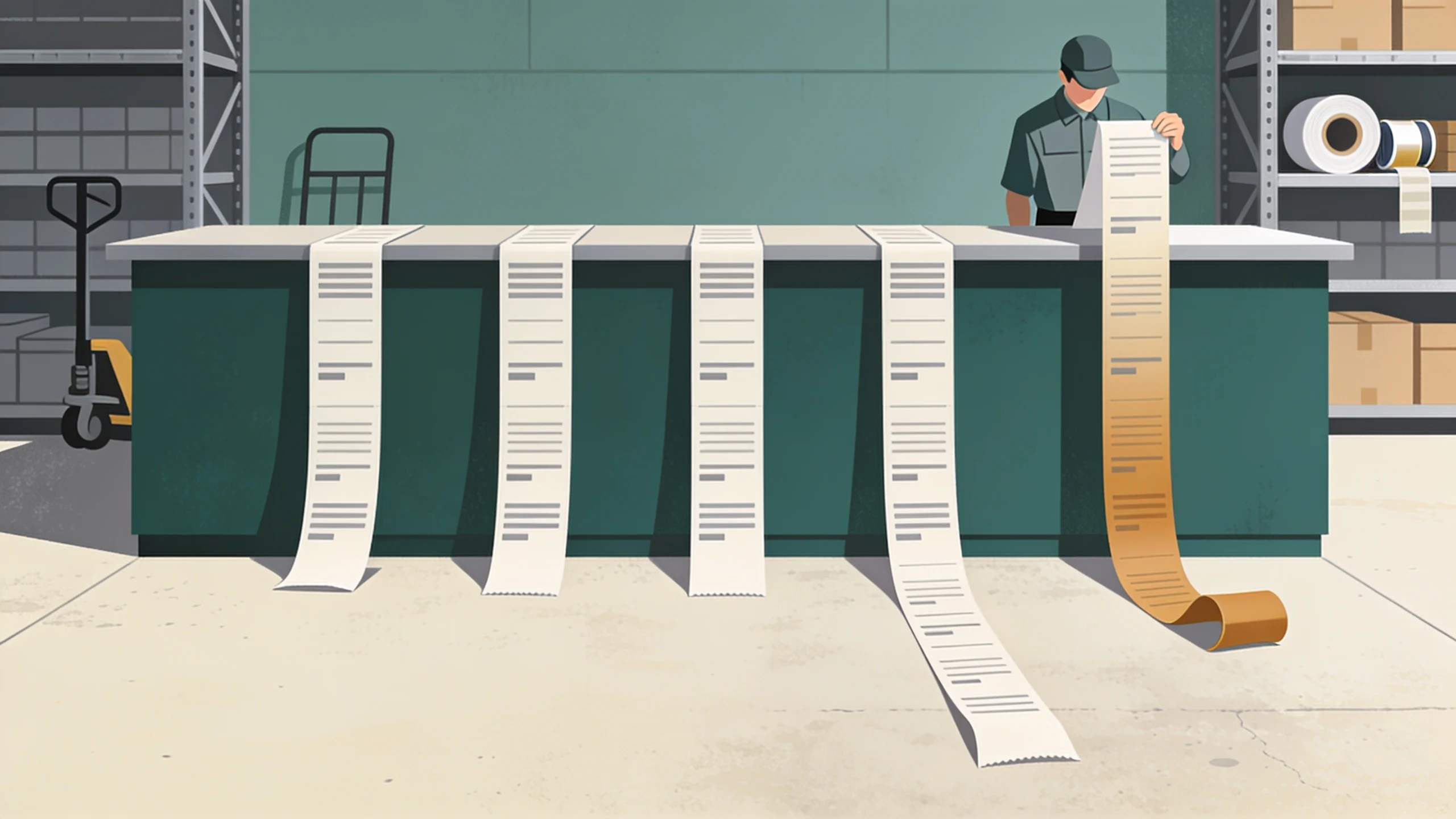
A distributor we build for went looking for inventory software and came back with quotes between $29 and $899 a month. They assumed somebody was padding the number. Nobody was. Those quotes described genuinely different products wearing the same two words on the box. Below are the real 2026 prices from five vendors, and the three variables that decide which end of that range your business lands on.
How much does inventory management software cost?
Annual-billing rates, off each vendor's own pricing page. That is the cheapest any of them will ever look.
- Sortly starts at $24 a month for 2 seats and 500 items, rising to $149 a month for 8 seats and 5,000 items.
- Zoho Inventory starts at $29 a month for 3 users, 2 locations and 500 orders, rising to $249 a month at 15,000 orders.
- inFlow starts at $129 a month for 2 users and 100 orders a month, rising to $699 for 10 users and unlimited orders. Its manufacturing line runs $179 to $899.
- Fishbowl starts at $229 a month for 2 users and runs to $729 for 10. Its warehouse and manufacturing products start at $595 and $675.
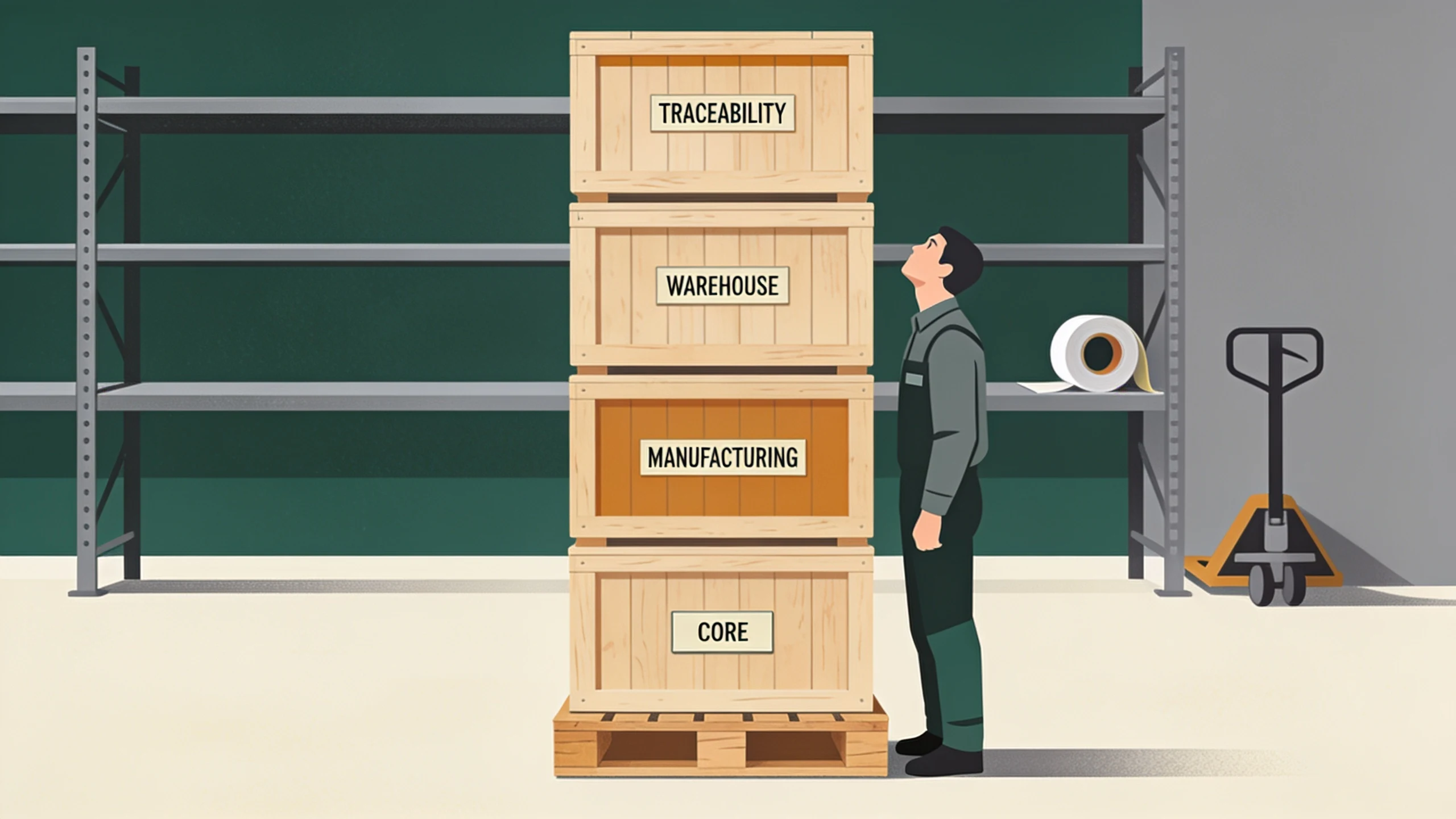
- Katana starts at $299 a month, with manufacturing, traceability and warehouse sold separately at $199, $249 and $149.
Read that list again and notice what it does not tell you. Sortly at $24 and Katana at $299 are not one product priced two ways. One counts things. The other runs production. If you are holding both quotes side by side, the gap between them is telling you that the job you are hiring the software to do has not been settled yet.
Inventory management system pricing models, and which one bites
Four billing models are in play, and most vendors mix them. Knowing which one a quote is built on tells you where the bill goes next year.
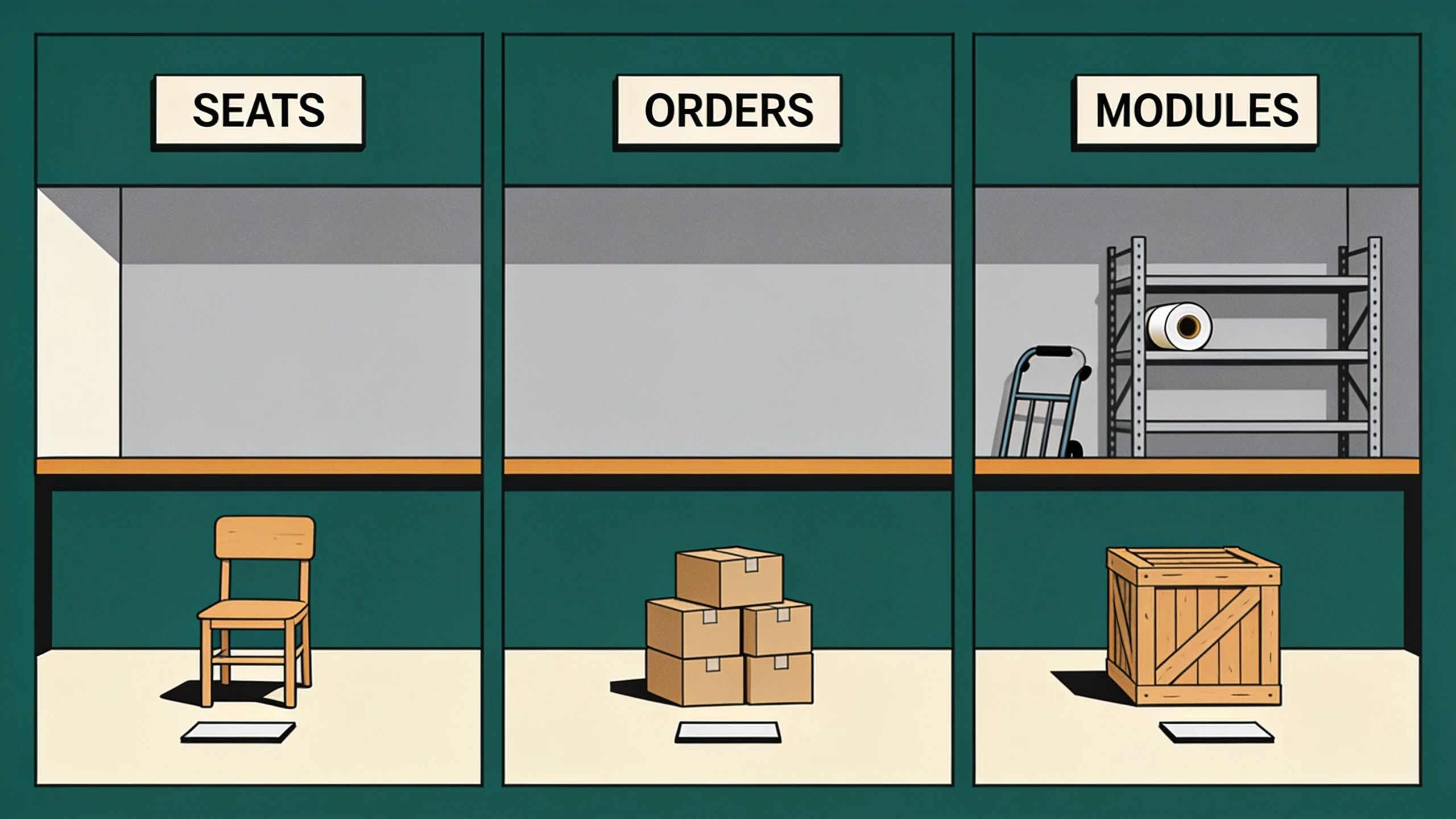
- Per seat. You pay for people. Cheap while inventory is two people's job, expensive the moment the warehouse floor needs read access.
- Per order. You pay for throughput. Predictable until a seasonal spike, at which point the overage is metered and nobody budgeted for it.
- Per location. You pay for buildings. Fine for one warehouse, punishing if you count stock on vans or at jobsites.
- Per module. You pay for capability. Manufacturing, barcoding and multi-currency are usually separate line items rather than higher tiers.
The trap is comparing two prices built on different models. A per-seat quote and a per-order quote can sit a hundred dollars apart today and a thousand apart in eighteen months, and neither pricing page will tell you which way it runs. Price both against the numbers you expect next year, not the ones you have now.
We run a free SaaS audit for small businesses, and unassigned seats turn up in nearly every one: plans still billing on a card for people who no longer open the tool, because nobody has recounted the licence list since the day it was signed. Per-seat inventory software drifts the same way, with one difference that makes it worse. Seats here also decide who is allowed to see a count, so the pressure to add them comes from the warehouse floor rather than from the office, and it arrives after the budget is set.
Three things move the number more than the tier you pick
Most buyers choose a tier and then discover the tier was never the variable.
Seats
Entry plans include two users. Almost every small business needs more than two, and the third seat is where the arithmetic turns strange. inFlow's Entrepreneur plan is $129 a month and covers 2 team members, with each additional one at $59. So a six-person shop pays $129 plus four seats at $59, which comes to $365 a month. The Small Business tier is $349 and includes five users and ten times the order volume. You would be paying more for less by staying on the cheaper plan.
That inversion is not a trick played on anybody. It is what happens when per-seat pricing meets a plan ladder, and it catches the businesses that priced the software once and never re-ran the numbers after hiring.
Orders per month
Order ceilings are the quietest constraint on the page. inFlow's entry plan covers 1,200 sales orders a year, which is 100 a month. A distributor shipping 40 orders a day exhausts that in the first week and pays $0.20 for every order after it. Zoho's entry plan caps at 500 orders a month, and its $129 tier lifts the ceiling to 7,500.

Count your real order volume before you open a single pricing page. Not your quietest month. Your busiest one.
Modules
The base plan is increasingly just a base. Katana lists its core product at $299 a month, then sells manufacturing management at $199, traceability at $249 and warehouse management at $149. A shop that needs all of them is looking at $896 a month, three times the number on the pricing page. Fishbowl divides along the same line, with its warehouse and manufacturing products starting at $595 and $675 on top of the inventory product.
The costs that never appear on the pricing page
Four of them, and all four are knowable before you sign anything.
Monthly billing carries a steeper premium than most buyers expect. Sortly's entry plan is $24 a month billed annually and $49 billed monthly, more than double for the privilege of not committing. inFlow's Entrepreneur plan moves from $129 to $161 the same way.
Introductory rates expire. Sortly's pricing page states that its 50 percent discount applies only to the first year of new customer subscriptions. Budget the year-two number, since that is the one you will live with.
Onboarding is sometimes mandatory. inFlow charges a $499 one-time onboarding package, required on most of its manufacturing plans. That is not a large number by itself. It is just not on the tier comparison where you were doing your sums.
And overage is metered. Twenty cents an order sounds like nothing right up until a seasonal spike puts you 3,000 orders past your ceiling.
What three years actually adds up to
Take a 12-person operation where 5 people need access, running about 600 orders a month across 2 locations with light assembly. Here is what each vendor bills over three years at published rates, before onboarding and before any overage.
- Zoho Inventory at $129 a month: $4,644
- inFlow Small Business at $349 a month: $12,564
- Fishbowl Growth at $429 a month: $15,444
- Katana core plus manufacturing at $498 a month: $17,928

That is close to a four-fold spread, and every one of those quotes is defensible for the right business. Zoho comes out cheapest here because this particular scenario fits inside its limits. Move the scenario to 20 users with traceability requirements and the ranking inverts.
When the sticker stops being the question
If one of those platforms fits, buy it. Zoho at $129 a month for a business that lives comfortably inside its ceilings is hard to beat, and no custom build competes with that on price.
The question changes when you start paying for the parts you do not use. It shows up in a recognisable way: you need one module out of four, or three seats out of the ten you are billed for, or the platform insists on a counting method that is not the one your team already runs. At that point the monthly number has stopped being a price and started being rent on capability nobody touches.
A custom inventory tool prices differently. Custom plus managed runs a flat monthly fee with hosting and upkeep included, in the same ballpark as Fishbowl Growth or Katana with a single add-on. What changes is the fit. The tool follows the counting method your team already uses, and it reaches the accounting and order systems you already run.
What to do this week
Before you open another pricing page, write down four numbers: how many people need to touch inventory, how many orders you ship in a busy month, how many locations you count in, and which of your existing systems those counts have to reach. Those four decide your price. The rest is packaging.
Then price your shortlist at the year-two rate with your real seat count, rather than the introductory rate with the two seats it includes. If the gap between what you would pay and what you would actually use looks wide, that is worth half an hour. We will run your numbers on a free 30-minute discovery call, and if buying one of these platforms is the better answer, we will say so.
No pitch, no pressure. We diagnose, you decide.
Have a question? We reply by email, no call needed.