
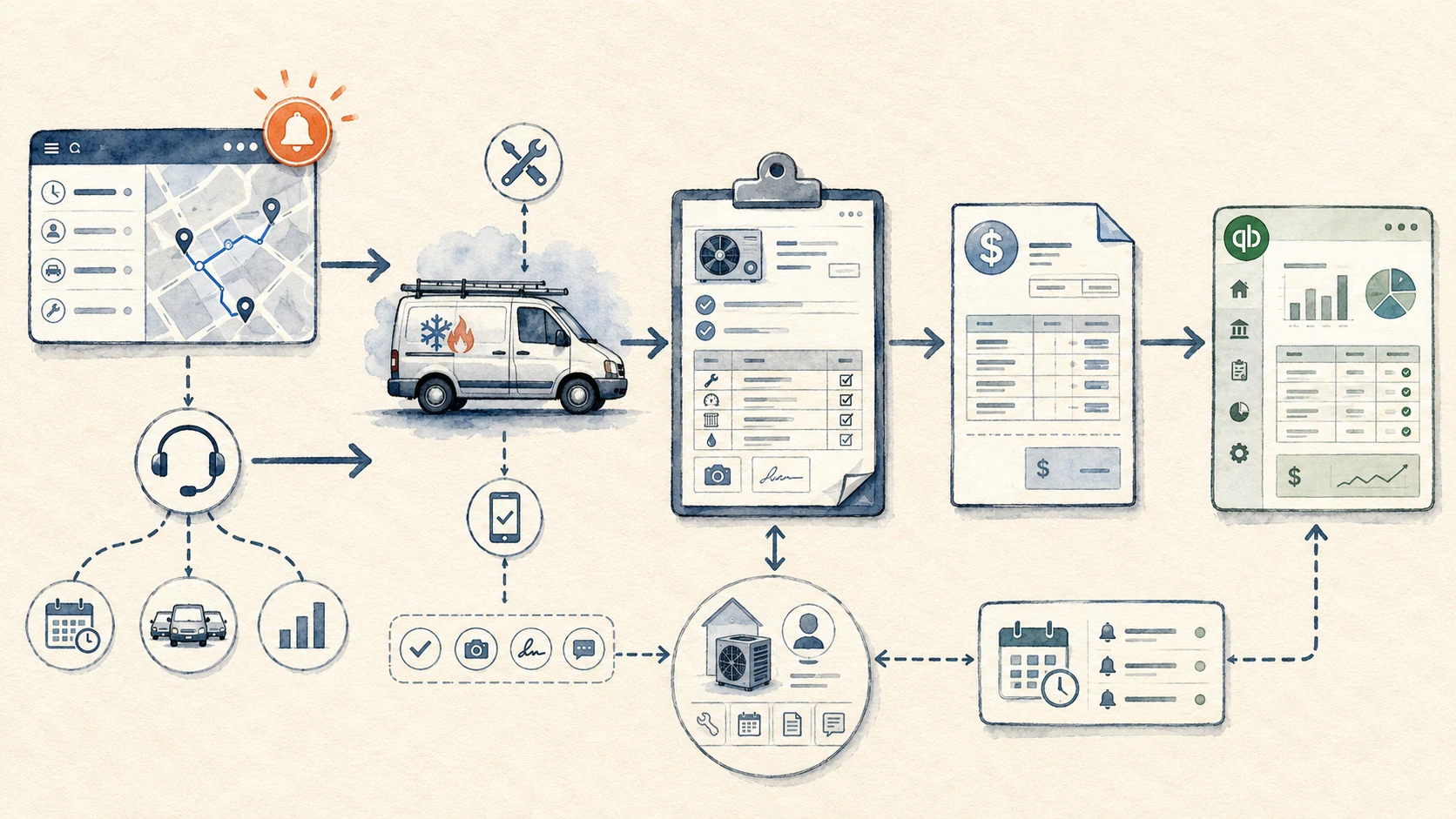
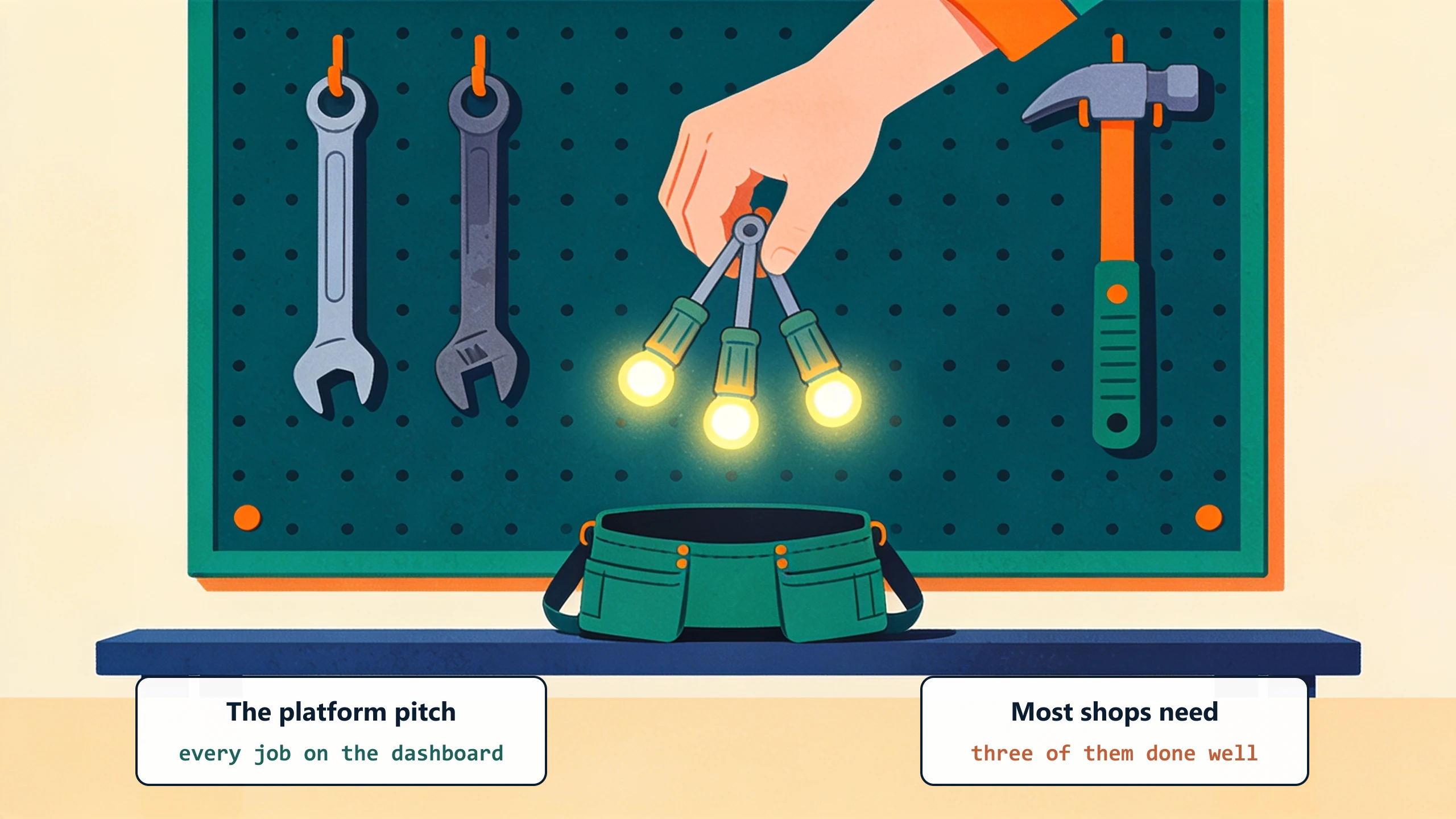
If you run an HVAC shop with 5 to 25 techs, ServiceTitan is the answer the industry will hand you. It is also $400 per tech per month, a 90-day implementation, and a contract structure that assumes you have a dispatcher who lives inside the platform. For shops at this size, the right question is not "which platform" but "which jobs do I need software to actually do." The answer is usually narrower than the platform pitch.
What HVAC ops software is really being asked to do
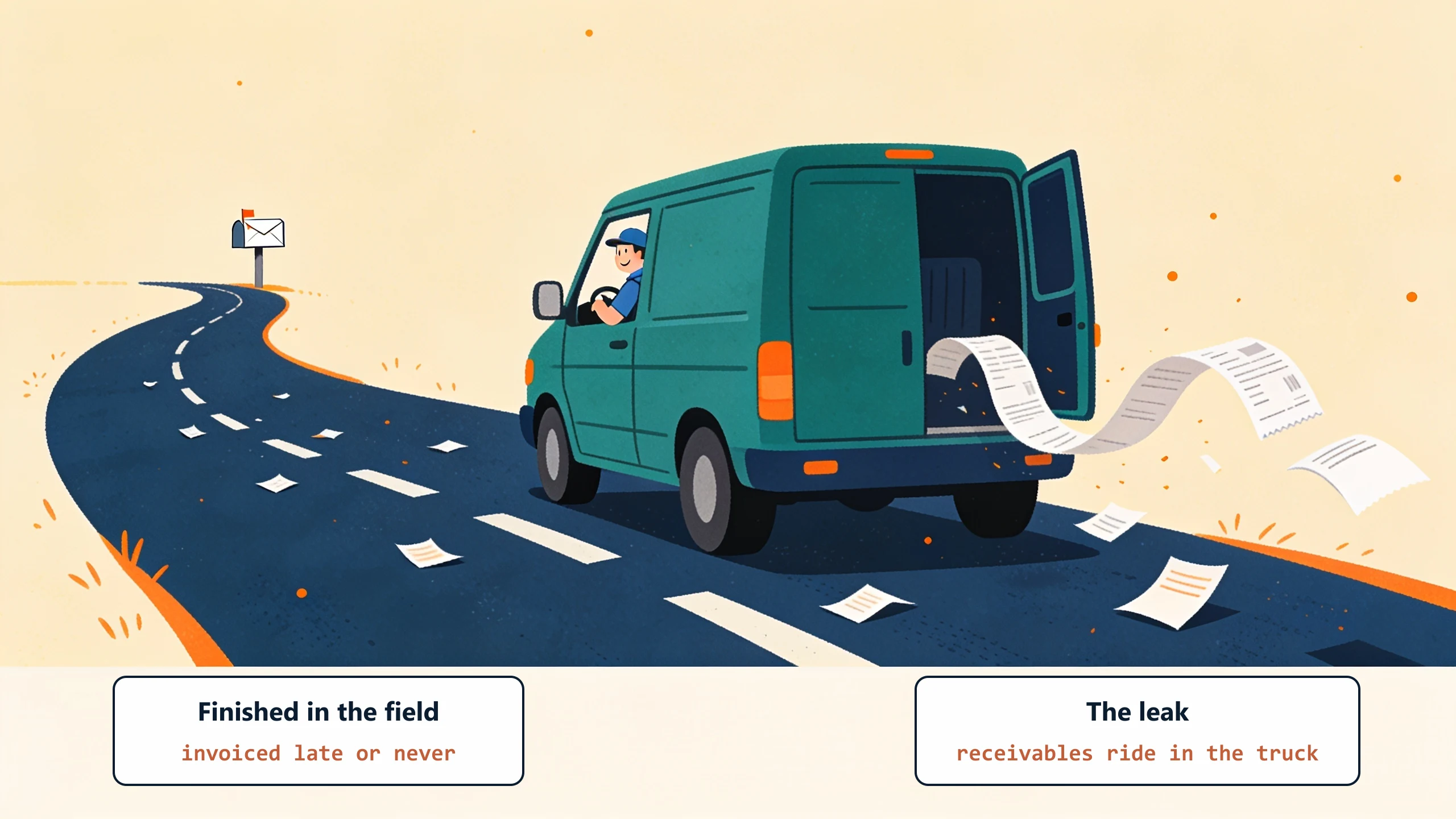
We keep surfacing the same leak when we dig into an HVAC or plumbing shop: real work gets finished in the field and the billing for it never quite catches up.
Strip away the dashboards and there are five real jobs. Most shops only need three of them done well to materially improve operations.
Dispatch and routing
Where is each tech, what are they on, and who takes the next call. For a 5 to 15 tech shop, this is usually a whiteboard in the back office plus the owner's text-message thread. That works until the third truck breaks down or two emergency calls hit at 11 a.m.
Invoicing on the truck
Technician finishes a job, generates an invoice with parts and labor, customer signs on a tablet, invoice is emailed before the truck pulls away. The single biggest win for cash flow. If your techs leave jobs without invoicing, you have receivables in the field and money you cannot collect.
QuickBooks integration
Every invoice from the field needs to land in QuickBooks without a person retyping it. Same for parts costs, payments, and credits. ServiceTitan does this well. So does a properly built custom layer over QuickBooks.
Customer history and equipment records
When a tech rolls up, they need to see "we replaced the compressor here in 2023, the unit is on a 5-year warranty, and the customer paid $4,800 last June." Without that, every visit is a fresh diagnostic. With it, you save time and you sell maintenance contracts more credibly.
Maintenance contract scheduling
Recurring tune-ups, filter changes, seasonal inspections. Either the system reminds the customer (and the dispatcher) automatically, or the contracts decay into "I think we owe Mrs. Henderson a tune-up but I cannot find the paperwork."
Where the data actually breaks: duplicate invoices and dropped recurring tickets
HVAC software creates duplicate invoices when the field app and QuickBooks both write billing records with no single owner of the invoice number. It drops recurring tickets when maintenance agreements live in a spreadsheet the dispatch board never reads. The fix is one system of record for each: billing in QuickBooks, agreements on the board.
When a shop tells us their software is the problem, two failures come up more than any other, and both are quiet enough to run for months before anyone catches the cost. If your current tool is generating duplicate invoices or losing recurring tickets, the search that brought you here was the right one: these are the two breaks that decide whether field-service software helps or just makes new work.
Duplicate invoices
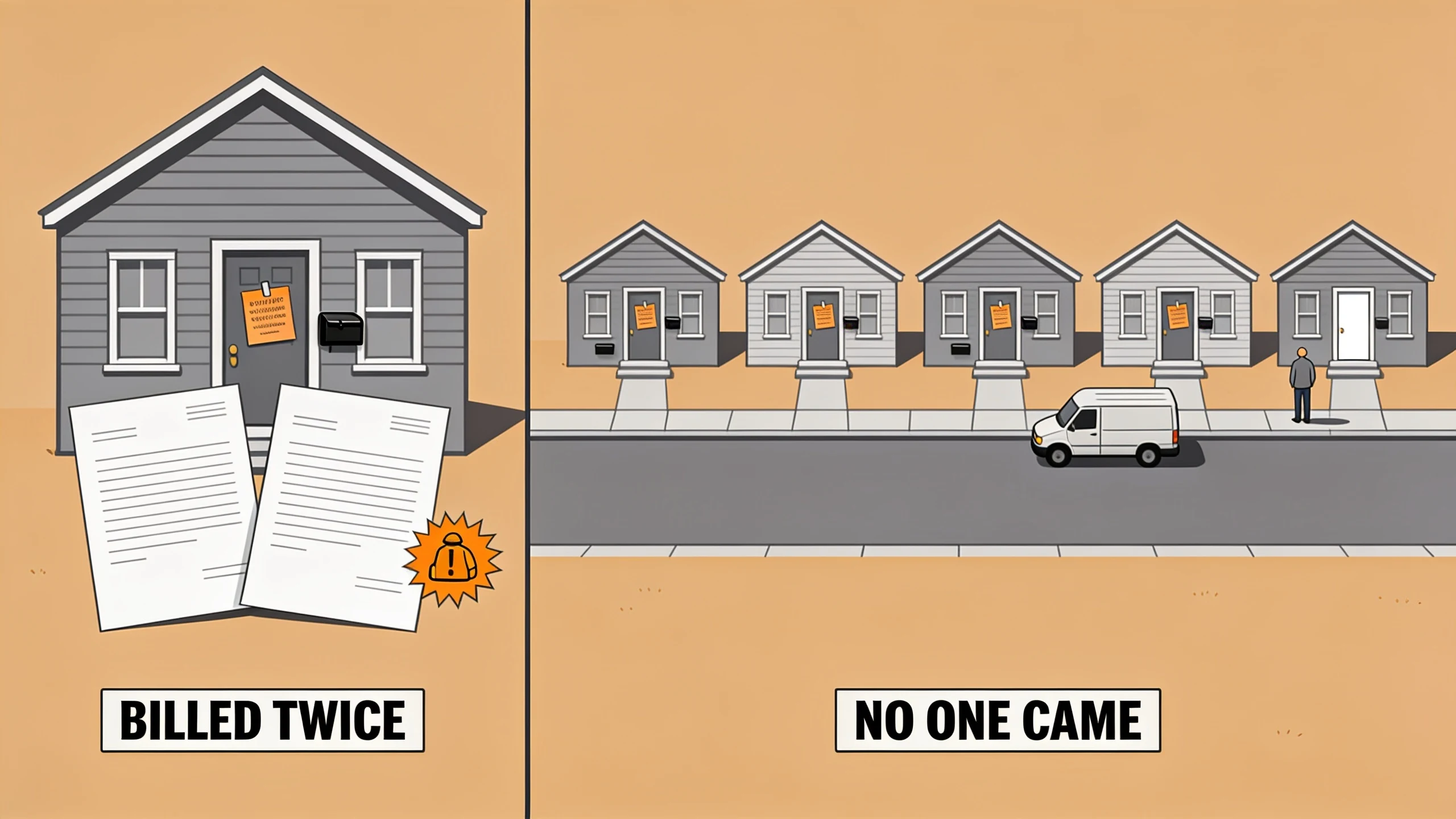
The tech invoices a job from the truck. The office, not seeing it land, invoices the same job again from the dispatch note. Or the sync to QuickBooks retries after a dropped connection and posts the same invoice twice. Now the customer gets billed twice and calls angry, or the books show revenue that was never collected, and someone spends an afternoon hunting the duplicate down. The root cause is almost always two systems both allowed to create the invoice, with no single owner of the record. The fix is not a bigger platform. It is one system of record for the invoice and a sync that posts once and knows it already posted, so the same job can never bill twice.
Dropped recurring tickets
Maintenance-contract visits, seasonal tune-ups, and standing weekly stops are supposed to appear as tickets on their own. When the recurring schedule lives in a spreadsheet or one dispatcher's memory instead of the software, the ticket that was owed never gets created. The tune-up quietly does not happen, the contract decays, and the first sign is a customer asking why no one came. Recurring work is the most predictable revenue a shop has, and it is the easiest to lose, because nothing breaks loudly when a ticket simply never appears. A tool that auto-generates the recurring ticket and puts it in front of the dispatcher turns that silent leak back into booked work.
What ServiceTitan does well, and what it costs
ServiceTitan is built for shops with 25-plus techs and a full-time dispatcher. At that size, the platform price ($350 to $450 per user per month, plus implementation) is justified by the volume of dispatch decisions and the complexity of multi-territory routing. For a 7-tech shop, the math gets uncomfortable: $30,000 per year in software fees against gross revenue of $1.5 to $3 million. The platform is doing 60 percent of what it can do; you are paying for the other 40 percent in case you grow.
The other live cost is the implementation. ServiceTitan's onboarding is a 60 to 90 day project that requires the owner's time. For a small shop where the owner is also a working tech, that is real opportunity cost on top of the per-seat fee.

What a custom-plus-managed alternative looks like
The model ByteQuix uses works for HVAC shops where the dispatch logic, the customer-history layer, and the QuickBooks bridge can be built around the way the shop already runs. A typical scope:
- Dispatch board the owner can update from a phone, tied to tech availability and skill tags.
- Mobile invoice generation on the truck, with parts library and labor codes from QuickBooks.
- Customer record card with equipment, history, and warranty/contract status auto-populated.
- Maintenance contract auto-scheduling with customer-side reminders.
Cost: a one-time pilot fee, then a flat monthly fee. The same QuickBooks bridge that we built for ServiceTitan migrations applies here, just without the platform layer underneath.
What to do this week
Pull last month's invoices. Count how many sat as receivables for more than 30 days. Pull last month's dispatch log (or your text thread). Count how many calls got reassigned mid-day because of routing or scope errors. Those two numbers are your real ROI baseline. Bring them to a free 30-minute discovery call and we will tell you whether a custom build pencils for your shop, or whether ServiceTitan really is the right answer for where you are headed.
No pitch, no pressure. We diagnose, you decide.
Have a question? We reply by email, no call needed.