
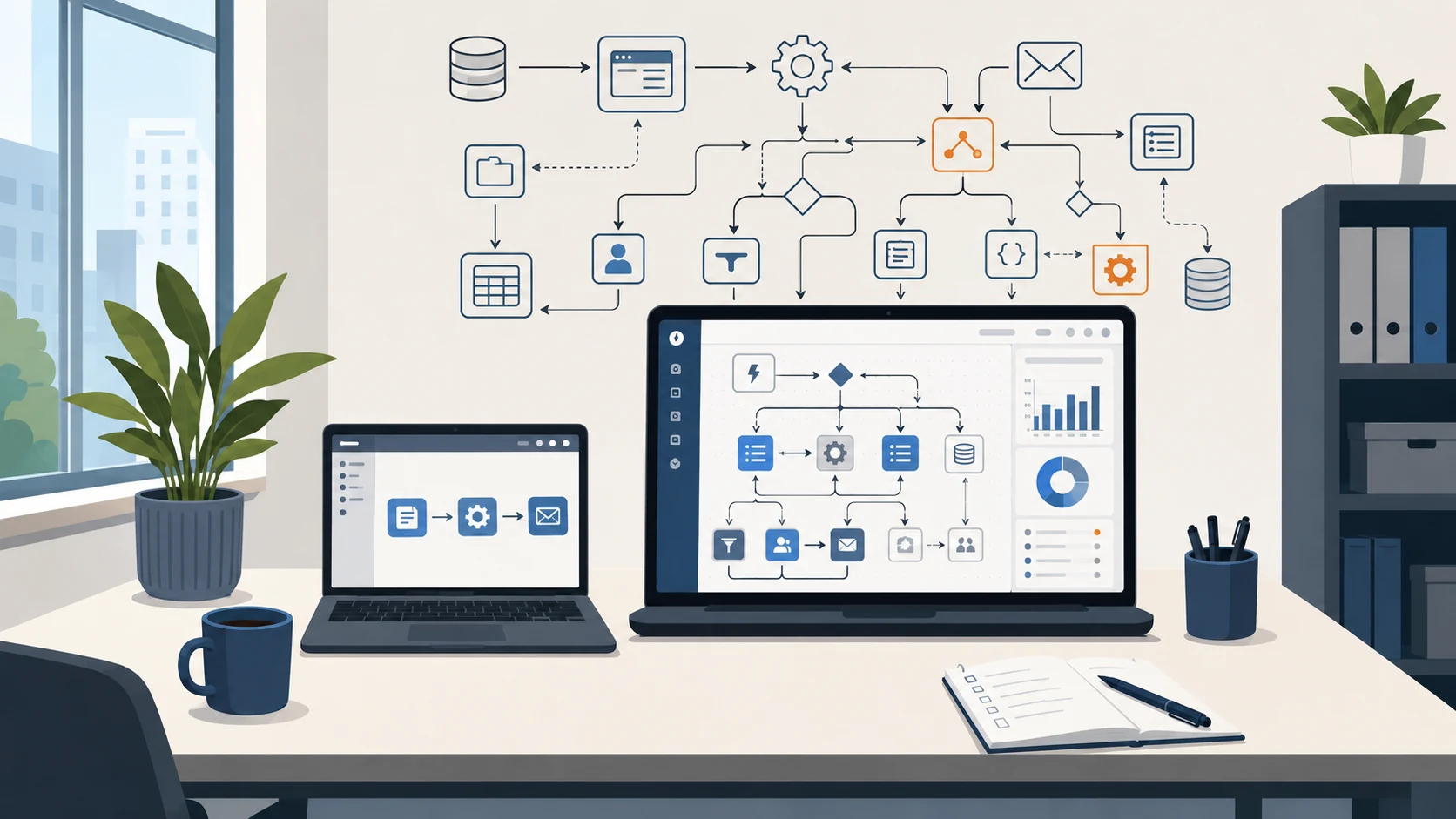
Zapier is a great product. Make and n8n are great products. They are the right answer for thousands of SMEs, until the day they are not. This post is for the businesses that have crossed that threshold and are trying to figure out what comes next.
Where DIY automation works perfectly
For routine two- and three-step automations between standard SaaS products, Zapier and its competitors are unbeatable. New row in a Google Sheet, send a Slack notification. New form submission, add to Mailchimp. Email matches a filter, move it to a folder. These are the bread and butter of DIY automation, and the tools handle them without much friction.
If your business runs on three to five popular SaaS apps and you have a few simple connections between them, you should be using Zapier or its equivalent. There is no faster, cheaper way to wire those connections.
Where DIY automation breaks down
The threshold most SMEs hit looks like this: you start with two-step automations, those work fine, then a real business need shows up that requires three or four conditional steps with logic that branches. You build it in Zapier. It works. Then a customer is unusual, and the automation fails silently. You open the dashboard. There are 14 different paths through the workflow. The one with the bug is on path 9.
Now you are debugging. To debug, you need to understand what each path does. To understand each path, you need to know what variables are flowing through it. Zapier's UI was built for two-step automations, not for understanding 14-path conditional flows. The interface is fighting you.
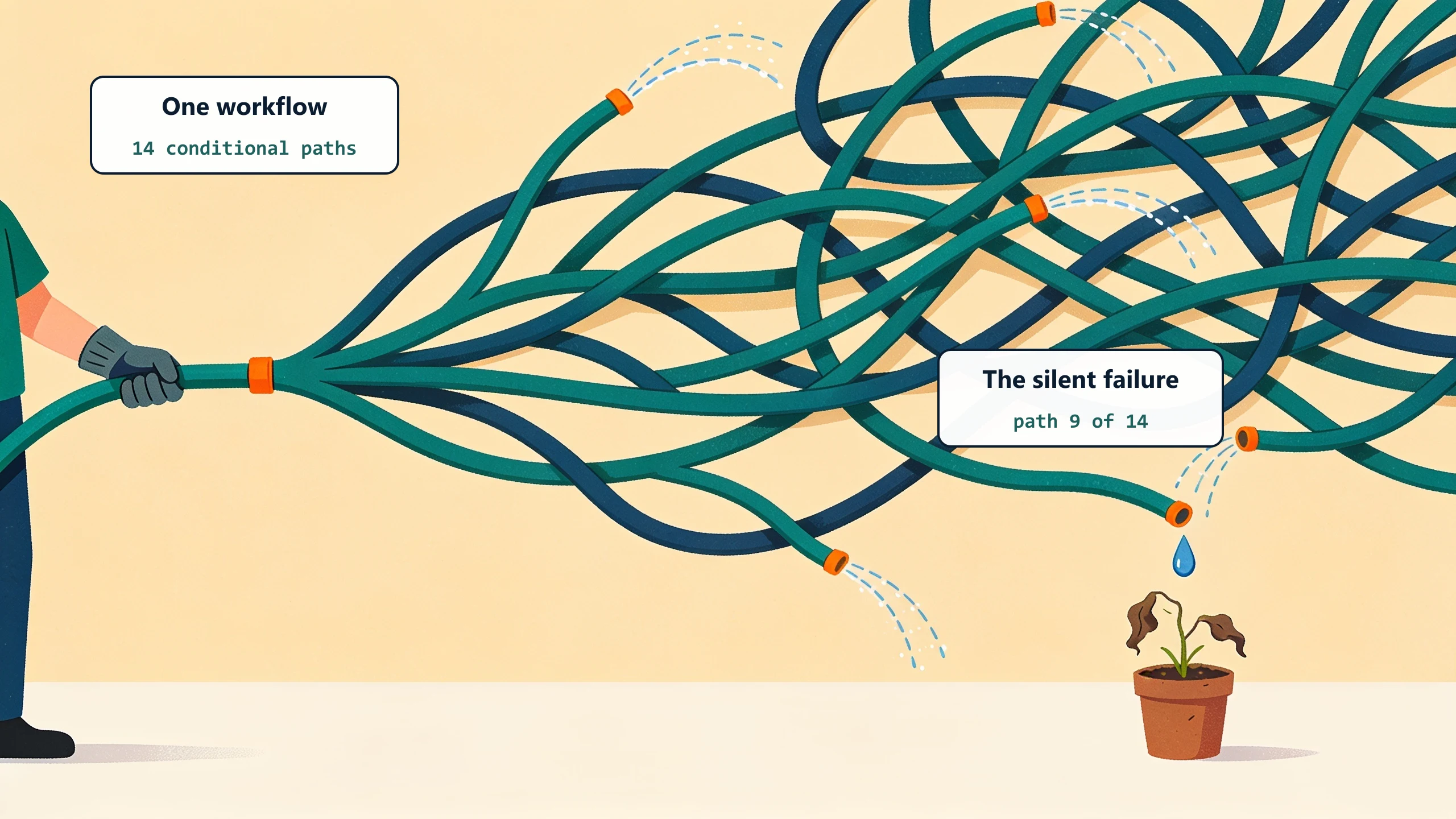
This is the tell: when DIY automation is working well, you barely think about the platform. When you cross the complexity threshold, you are thinking about the platform constantly. The tool that was helping you is now the bottleneck.
Three options at the threshold
You have three realistic options once DIY automation breaks down. Each has a real fit, none is universally right.
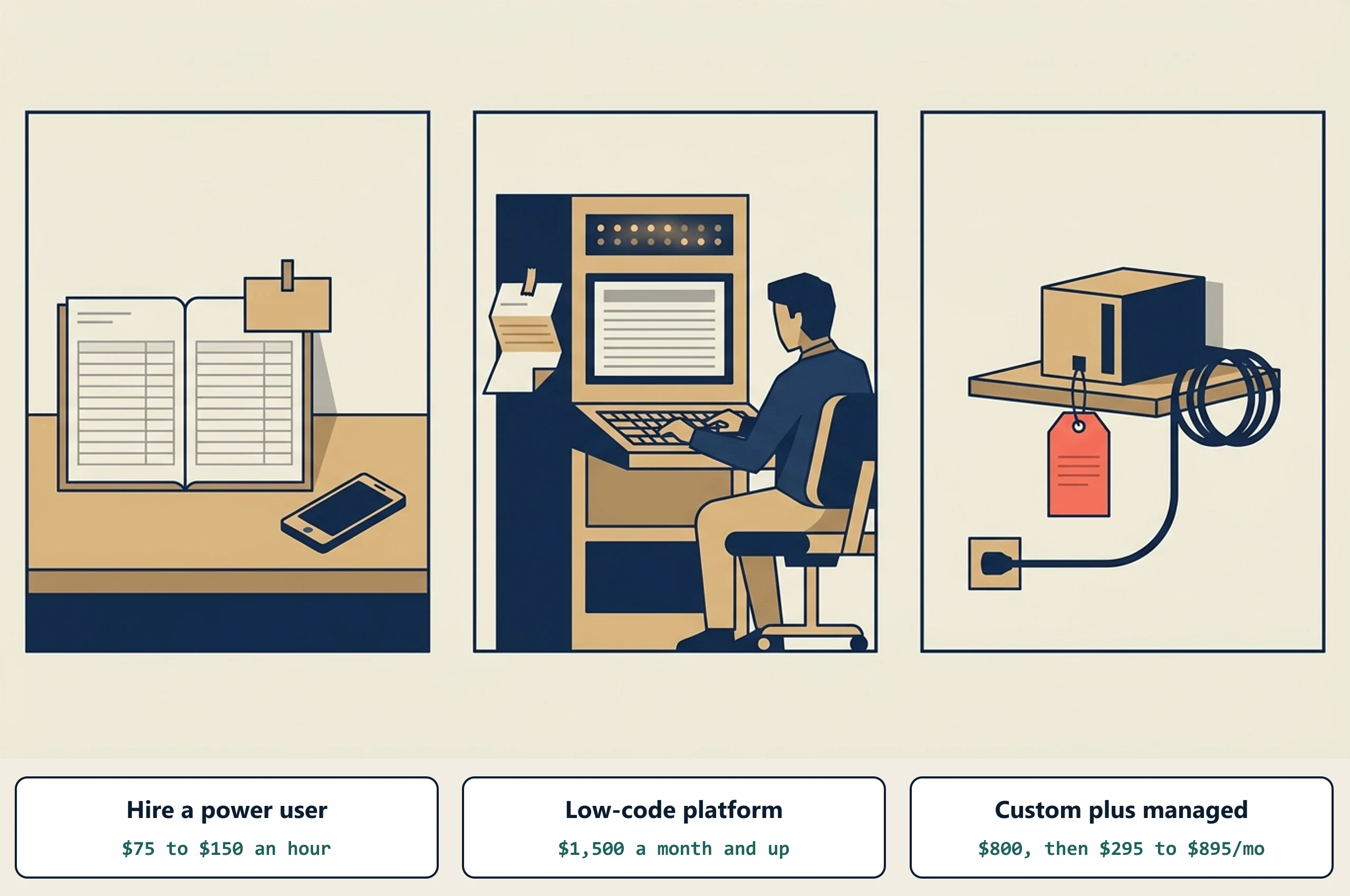
Option 1: Hire someone fluent in DIY automation
Zapier and Make have a power-user community. There are independent consultants who can build genuinely complex flows in those tools. Hourly rates run $75 to $150. For some businesses, especially those with a heavy "we need to do exactly what Zapier does, just bigger," this is the right answer.
The risk: the consultant builds something that works, then you cannot maintain it. Six months later, a SaaS API changes, the flow breaks, and you are calling them again at $125 per hour just to keep it running. Total cost of ownership creeps. Knowledge stays with the consultant, not your business.
Option 2: Move up to a "low-code" platform
Tools like n8n (self-hosted), Workato, and Tray.io are designed for the use cases that exceed Zapier's complexity ceiling. They handle conditional logic better. They surface variables more clearly. They scale to higher event volumes.
The risk: most of them require either a technical person on staff (n8n especially) or a real platform fee ($1,500 per month and up for Workato or Tray). If your business does not have someone who would call themselves "technical" in a job interview, n8n is a different shape of trap. If the platform fee crosses the threshold where custom software pencils, you are paying for the platform AND still building the integration logic yourself.
Option 3: Replace the brittle DIY flow with custom software
For an SME with one specific workflow that has outgrown Zapier, the third option is to commission a small piece of custom software that does that one workflow well. Not a platform. Not a replatforming. Just the one workflow, built around your business, running on infrastructure someone else manages.
The math at the relevant volumes: a custom-plus-managed tool runs a flat monthly fee, including the build (after a pilot to validate it). The maintenance, the platform monitoring, the small changes when the workflow shifts, all included. There is no consultant to call when something breaks. There is no platform fee that scales with usage. There is no per-user cost.
The right fit: when the failed Zapier flow was doing something specific to your business that no off-the-shelf tool models well. Custom software wins when the workflow is bespoke. DIY automation wins when the workflow is standard.
How to decide
Three questions to disambiguate:
- Could you describe this workflow to a new hire in five minutes? If yes, it is probably standard enough that DIY automation can handle it (and a power user could fix the flow you are stuck on). If your description requires drawing diagrams and saying "the tricky part is..." three times, it is probably bespoke enough that custom software fits better.
- Is the workflow tied to data that a SaaS owns and exposes well? Zapier and Make excel at data that lives in well-known SaaS APIs. They struggle with data that lives in legacy systems, on-prem databases, or industry-specific platforms (rental management systems, manufacturing ERPs, construction project accounting). Custom software fits better when your data lives in places DIY platforms struggle to reach.
- Are you the one fixing the broken flow when it breaks? If your team includes someone who already maintains your DIY automation, the cost of staying on Zapier is mostly time you have already absorbed. If the answer is "no one really maintains it, we just rebuild things when they break," you are paying a hidden cost that custom-plus-managed software eliminates by including maintenance.
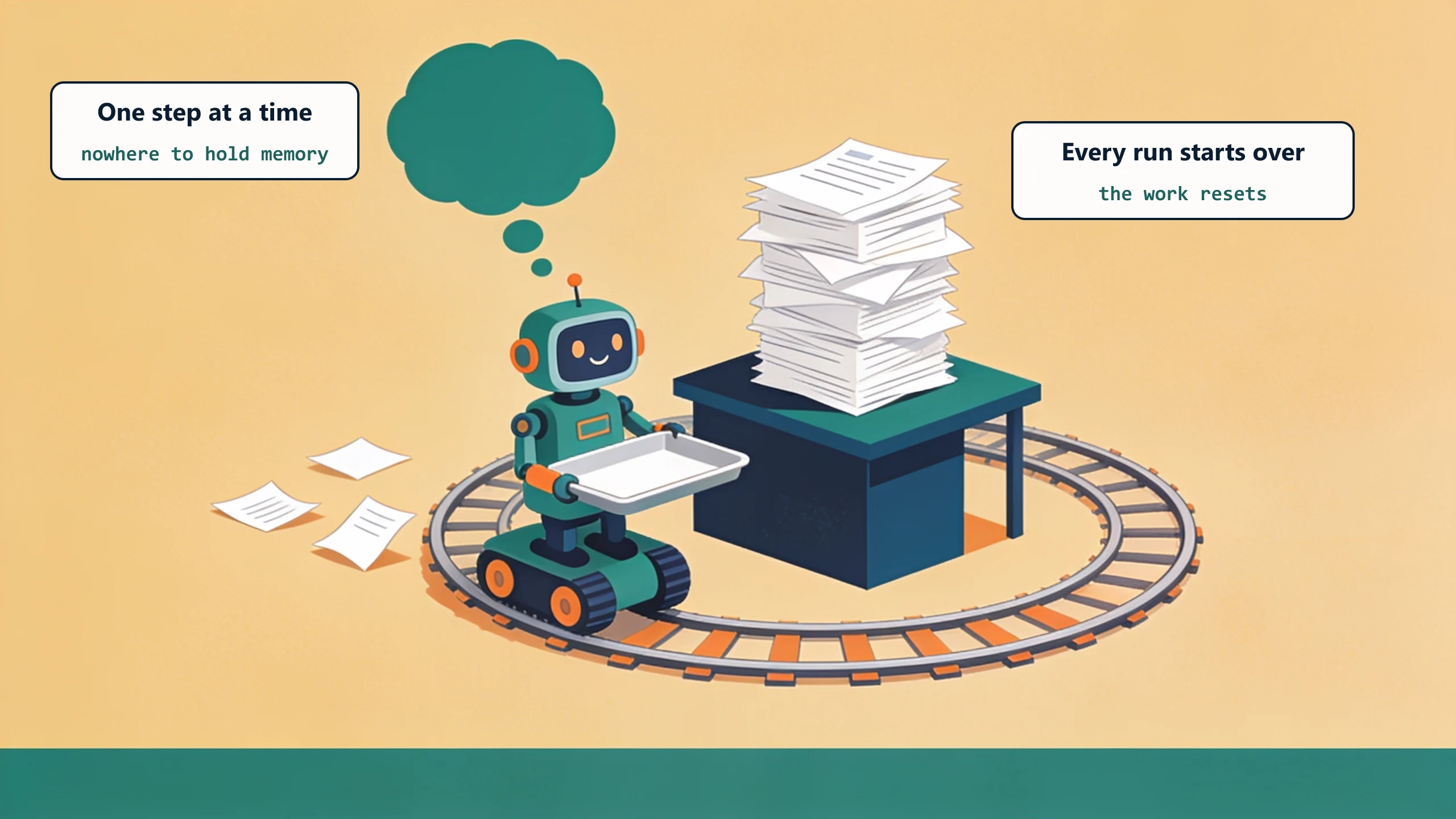
We get handed a lot of broken Zaps, and they fail for the same reason nearly every time: the flow needs to remember something between runs, and a connector firing one step at a time has nowhere to hold that memory, so the work resets on every run and no one can say why.
What to do this week
Before picking a tool at all, it is worth seeing which handoffs are actually worth automating, because the answer is usually two or three and not the whole list.
If your DIY automation has hit the complexity ceiling on one specific workflow, write down what that workflow does in plain English. One paragraph. No tool names. Just the business outcome. That paragraph is the brief for whatever comes next.
If you want to walk through it with us, book a free 30-minute discovery call. We will tell you which of the three options fits your situation. Sometimes the answer is "stay on Zapier and hire a consultant for this one fix." Sometimes the answer is "this should be a custom tool with a flat monthly fee." We are not going to recommend custom software when DIY would do.
No pitch, no pressure. We diagnose, you decide.
Have a question? We reply by email, no call needed.