
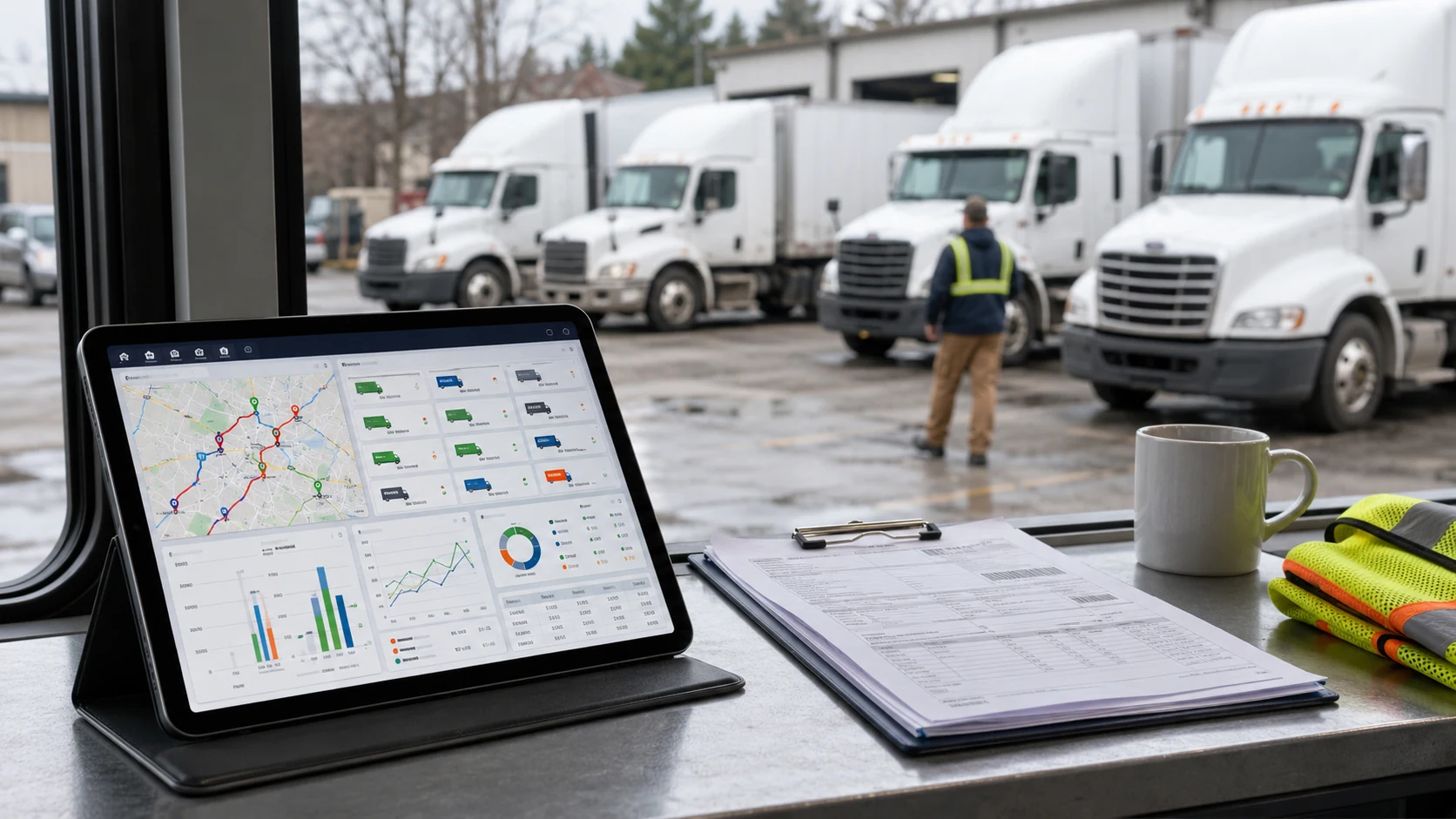
A 10-truck fleet runs fine on a dispatch board, a phone, and a tight bookkeeper. A 30-truck fleet runs fine on McLeod or TMW or another full TMS at $40,000 to $90,000 per year. The space in between is where most family-owned fleets get stuck. Tools built for big carriers cost too much, and tools built for owner-operators do not handle multi-truck operations. Here is what actually needs software at this size and what does not.
The four operational jobs that hurt
For a 10 to 30 truck fleet, four jobs eat the most administrative time and create the most cash-flow risk when they go wrong.
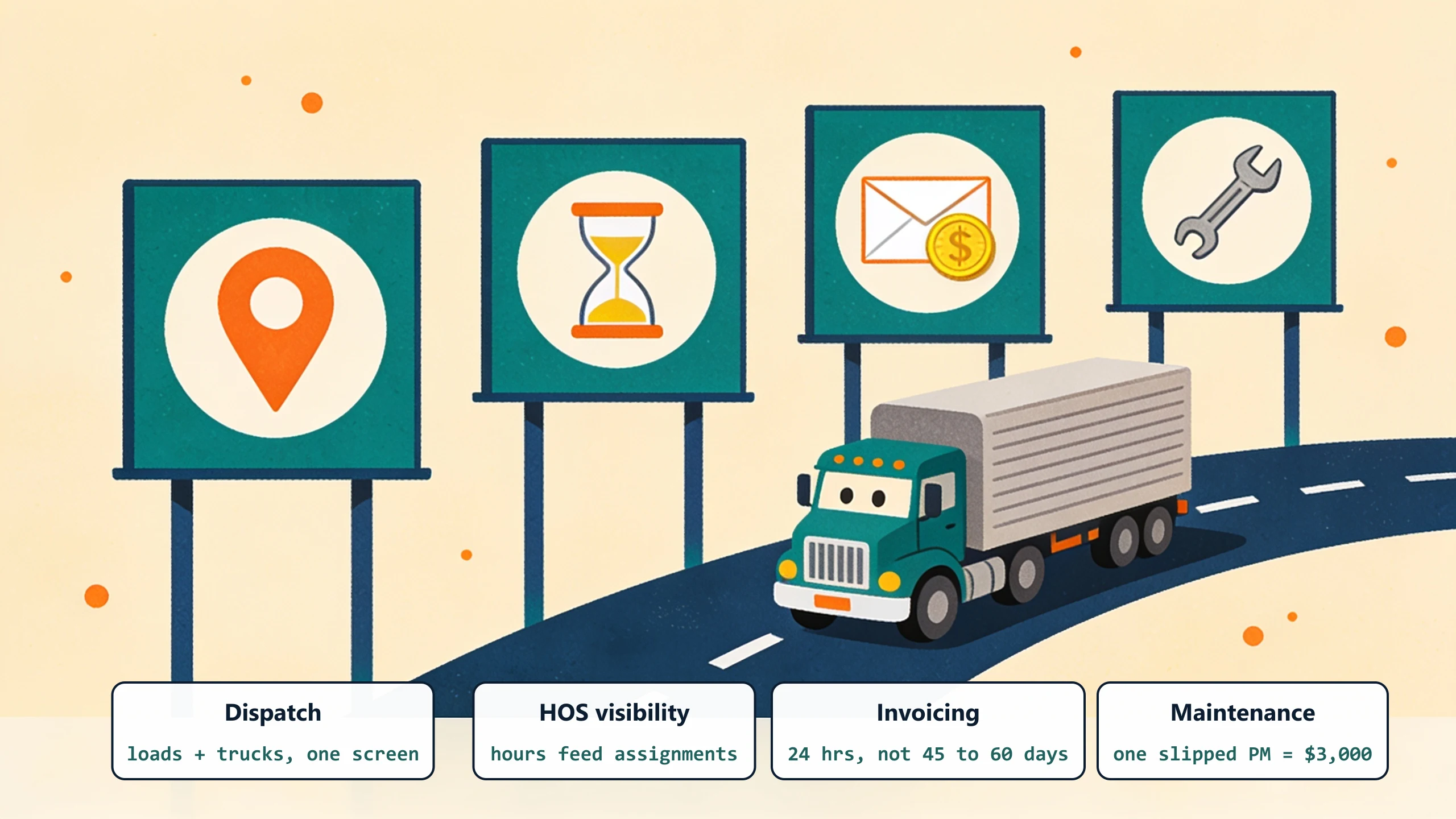
Dispatch and load assignment
Matching loads to trucks based on availability, location, hours of service, and customer preferences. The right system shows the dispatcher every truck's status and every open load on one screen. Most fleets at this size run dispatch in the dispatcher's head plus a whiteboard. That works at 10 trucks. It does not work at 25.
ELD compliance and HOS visibility
The ELD mandate is years old, but the connection between the ELD provider, dispatch, and payroll is rarely clean. The right system pulls hours-of-service data into dispatch decisions automatically, so the dispatcher does not assign a load to a driver who is about to run out of hours.
Customer invoicing and broker reconciliation
For brokered freight, every load has a rate confirmation, a BOL, possibly a lumper receipt, and a customer-specific paperwork standard. The shop that bills cleanly turns paperwork around in 24 hours. The shop that does not waits 45 to 60 days for payment and bleeds working capital.
Maintenance and DOT compliance
PMs by mileage, hours, or date. DOT inspection schedules. Driver qualifications and CDL expiration. A 25-truck fleet that lets one PM slip ends up with a downed truck that earns no money for two days while costing $3,000 in roadside repair.
What the platforms cost, and what they include
McLeod, TMW, AscendTMS, ITS Dispatch, Truckbase. Range: $40,000 to $90,000 per year for a 25-truck fleet. The platforms do all four jobs above, plus features small fleets do not need (multi-region routing, drayage, intermodal). Implementation: 60 to 120 days. The platform makes sense at 35-plus trucks where the volume of dispatch decisions justifies a full TMS workflow.
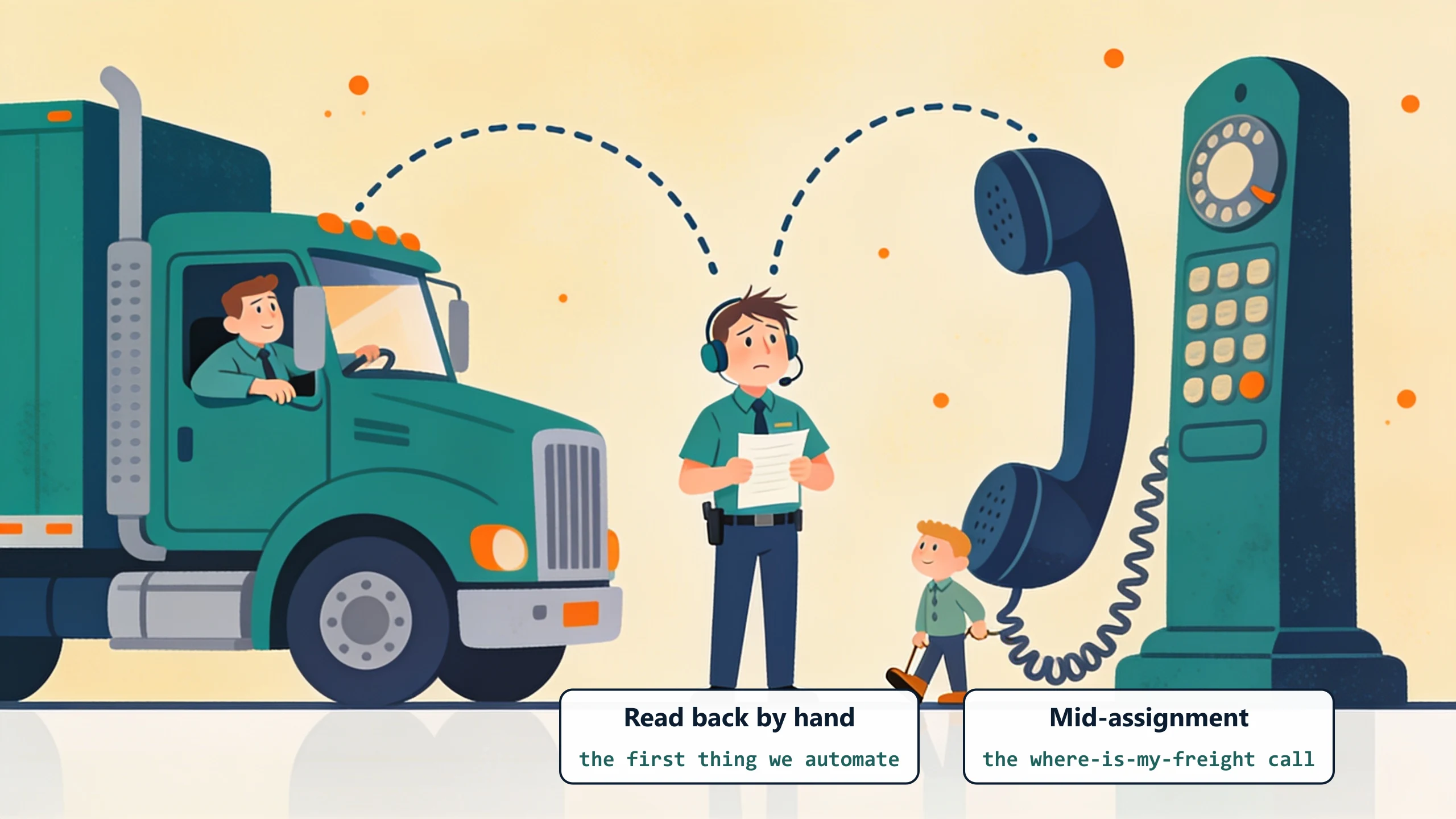
Dispatch is never just dispatch in a small fleet. The person matching loads to trucks is also the one a shipper phones to ask where their freight is, so they break off mid-assignment to pull up a carrier tracking screen and an email thread, then read the answer back by hand. That phone tag is the time sink we usually end up automating first.
The custom-plus-managed alternative for 10 to 25 trucks
For a fleet at this size with QuickBooks already in place, a custom layer covers the four real jobs at a fraction of the platform cost.
- Dispatch board with truck status, ELD-derived HOS, and open loads on one screen.
- Customer invoice generation tied to load completion, with broker-specific paperwork rules.
- Maintenance schedule with mileage and date triggers, driver-qualification tracking, DOT expiration alerts.
- QuickBooks bridge that posts settlements and customer invoices automatically.
A one-time pilot fee, then a flat monthly fee. The model fits because the workflow logic is small-fleet specific, the integrations (ELD provider, QuickBooks, customer EDI) are bounded, and the operations team is small enough to onboard quickly.
What to do this week
Pull last month's invoicing aging report. How many loads sat over 30 days? How many over 60? Pull last month's PM log. How many PMs slipped past their target date? Those two numbers tell you whether your bottleneck is paperwork or maintenance discipline. Bring them to a free 30-minute discovery call and we will tell you whether a custom layer over QuickBooks pencils for your fleet, or whether you are at the size where a full TMS is the better call.
No pitch, no pressure. We diagnose, you decide.
Have a question? We reply by email, no call needed.