
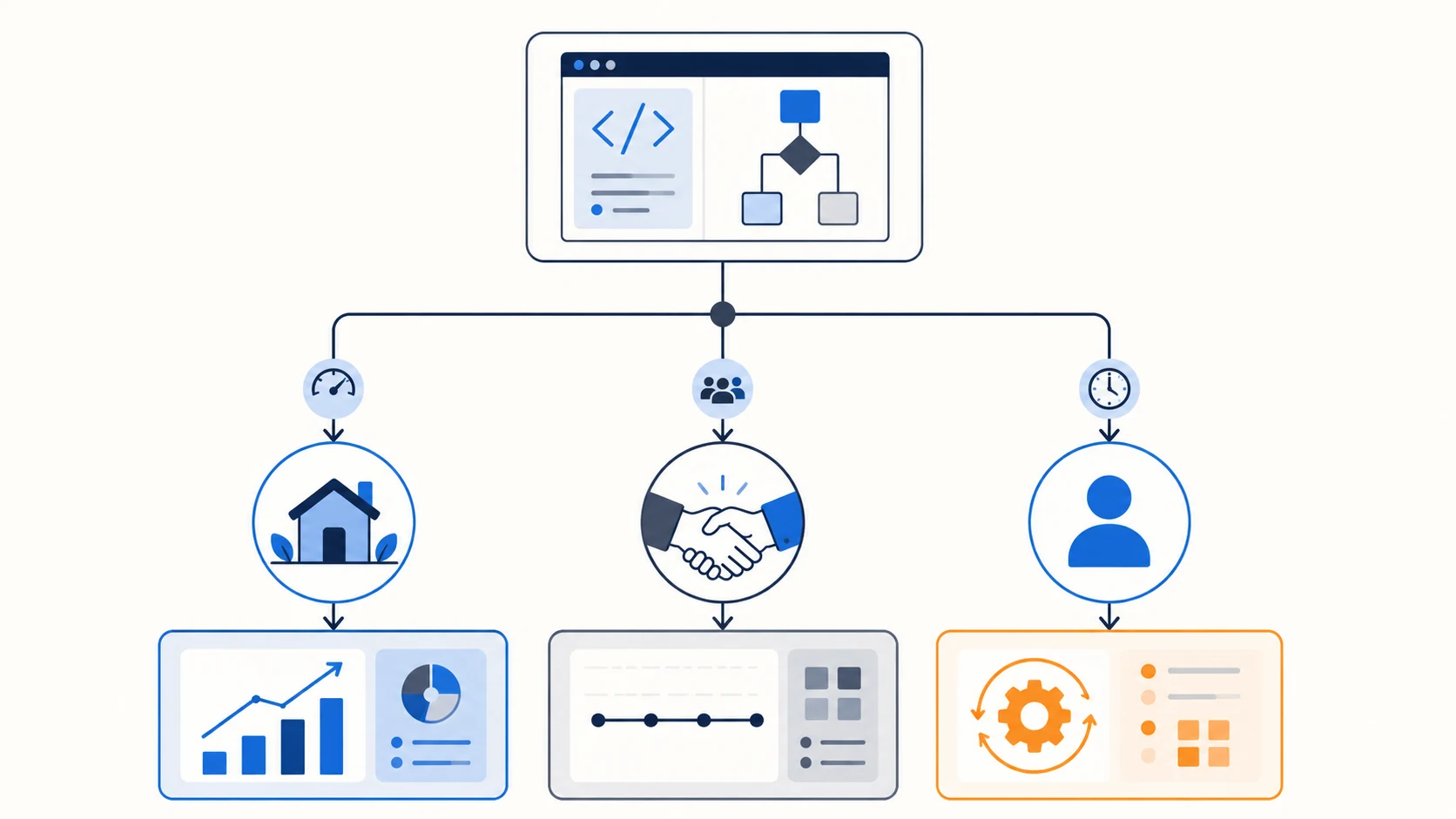
"Should we outsource this?" is the wrong question for most SMEs. The right question is "which of the four delivery models fits the specific software we want?" Answering that requires understanding what each model is actually good for.
The four delivery models, ranked by typical small-business fit
The models differ less in what they build than in who answers when it breaks.
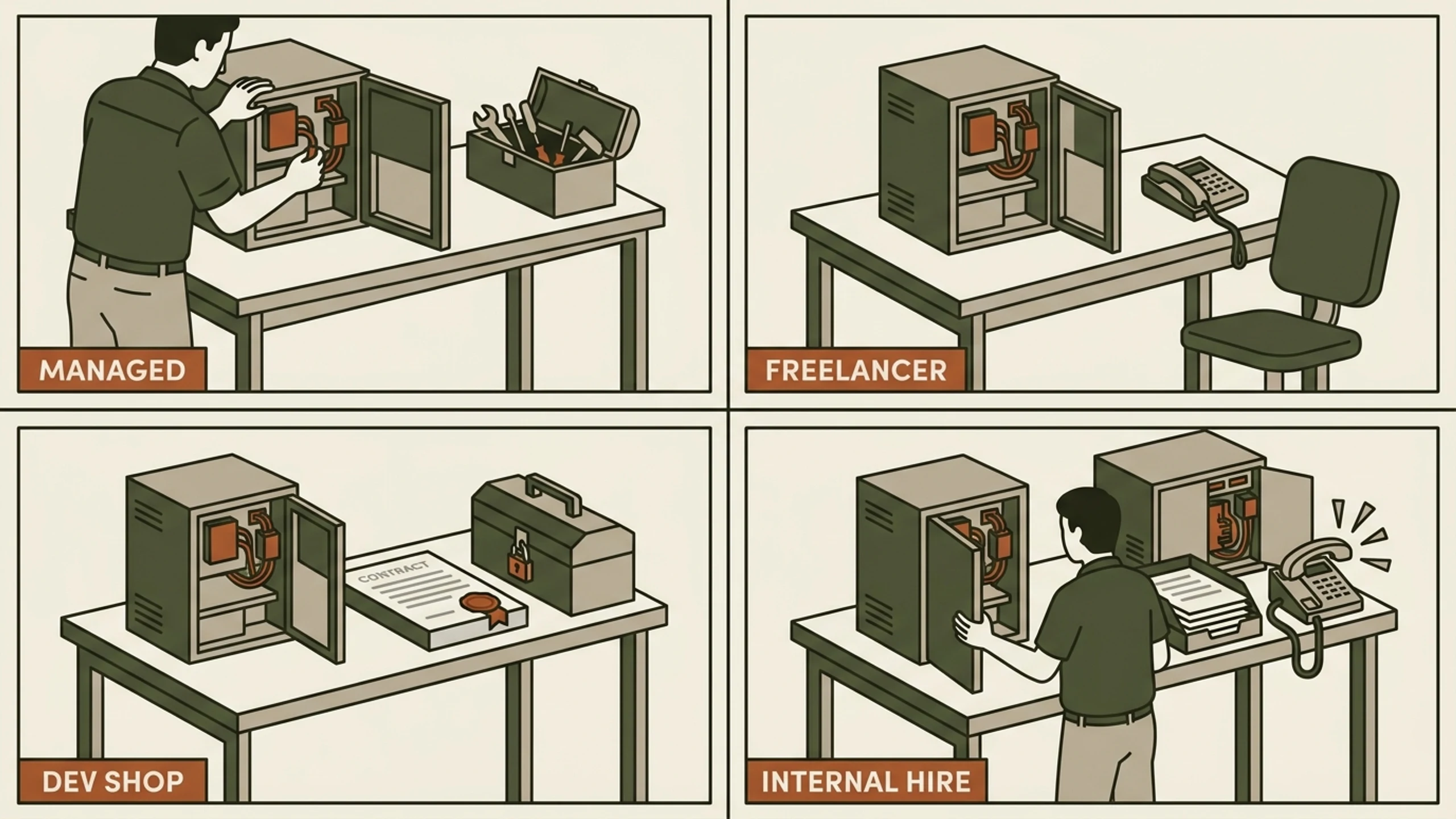
Model 1: Custom-plus-managed (read: ByteQuix and similar)
Best fit: One specific workflow that needs to be replaced or augmented, integrated with systems you already run, and that you do not want to maintain yourself.
Cost shape: a one-time pilot fee, then a flat monthly fee. Maintenance, hosting, monitoring included.
Timeline: 1 to 3 weeks for the pilot. Continuous after that.
Watch for: Vendor longevity. The model only works if the vendor stays in business and stays accessible. Pick a vendor with multiple years of operating history and a published roster of production tools. Read the primer on the category.
Model 2: Freelancer or solo developer
Best fit: Single-shot project where you have a technical owner or operations person on staff who can supervise, review code, and own the deliverable after launch. If you do not have that person, this model has a high failure rate.
Cost shape: $50 to $150 per hour. Total project: $5,000 to $25,000 depending on scope.
Timeline: 4 to 12 weeks.
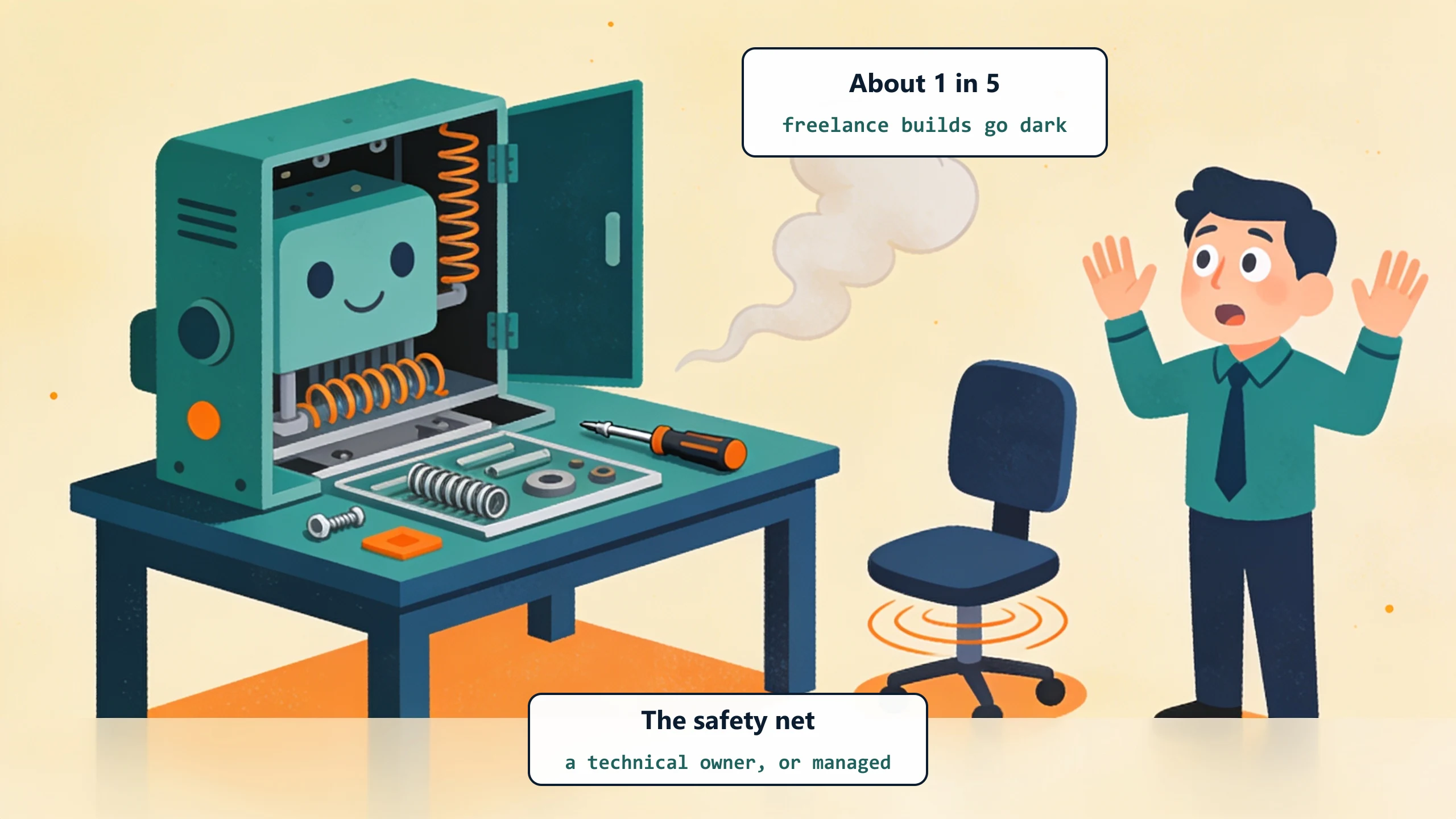
Watch for: Continuity risk. A solo engagement has one point of failure. If the freelancer takes a full-time role, gets sick, or moves on before handover, there is no bench behind them and usually no documentation. Quality risk: a single freelancer has nobody reviewing their work.
Model 3: Project-based dev shop
Best fit: Larger projects ($25,000 plus) where you need a team's worth of skills (design, frontend, backend, infrastructure), the project is well-scoped, and you have either a technical owner or a budget for ongoing maintenance after launch.
Cost shape: $25,000 to $150,000 for the build. Then $500 to $5,000 per month for retainer maintenance, or $150 per hour for ad-hoc changes.
Timeline: 3 to 9 months.
Watch for: The maintenance cliff. The shop has economic incentive to ship and walk. You have economic incentive to keep them on the hook. The contract terms matter.
Model 4: Internal hire
Best fit: You have ongoing software needs that justify a full-time developer, and you can support them (which means at least one other technical person on staff for code review, mentorship, and resilience).
Cost shape: $90,000 to $150,000 fully loaded. Plus tooling, plus management overhead.
Timeline: 2 to 4 months for the hire to ramp.
Watch for: One developer cannot be excellent at frontend, backend, infrastructure, security, integrations, and DevOps simultaneously. They will be lonely. They will leave within 18 months on average. The institutional knowledge leaves with them.
The decision tree
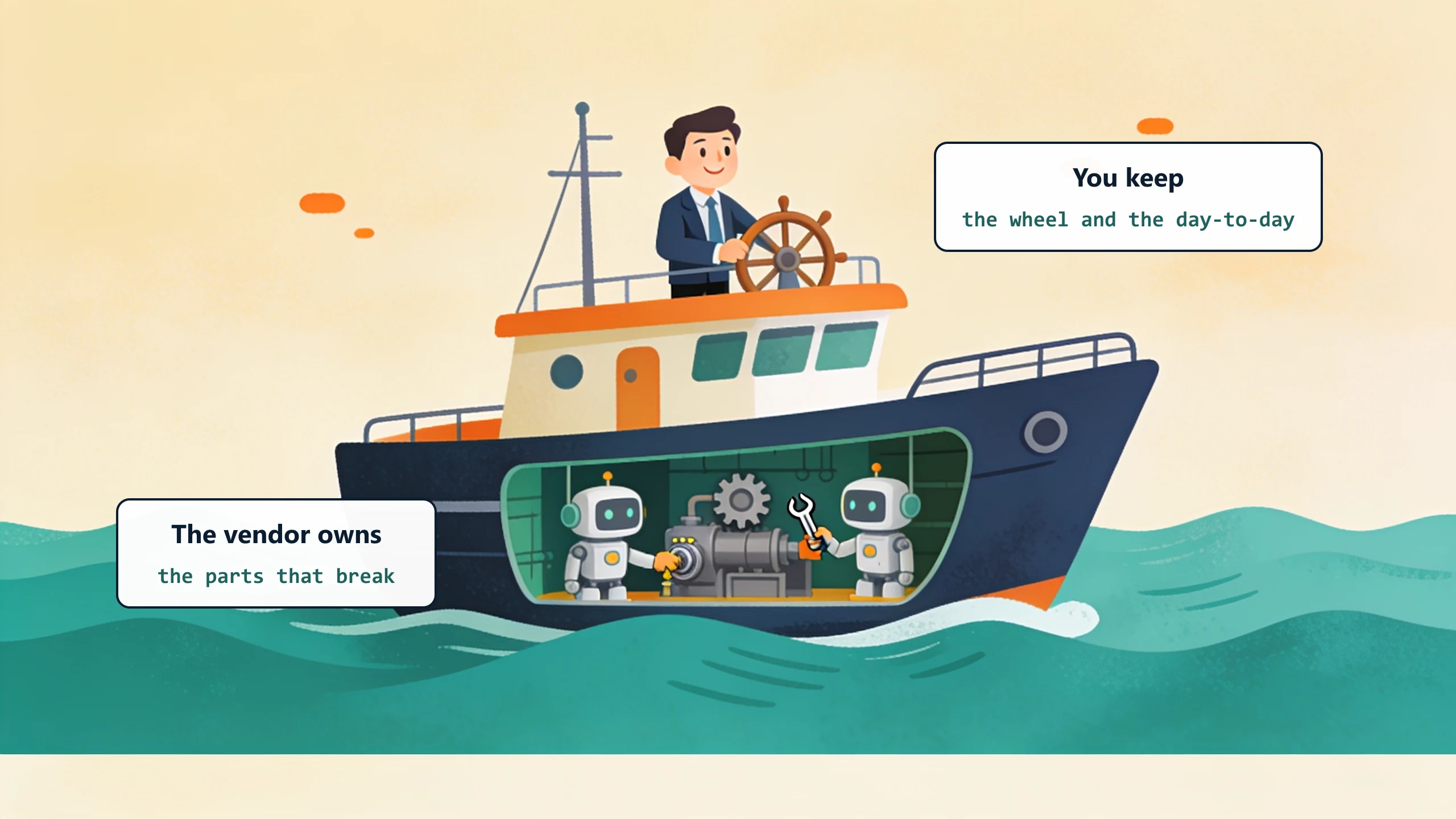
- Do you have one specific workflow problem, or ongoing software needs? One specific workflow: model 1 or 2. Ongoing needs: model 4 (or model 1 with a higher tier).
- Do you have a technical person on staff? Yes: any model works. No: model 1 is usually the only safe option. Model 2, 3, and 4 all assume someone on your side can supervise or maintain. Model 1 includes the supervision and maintenance contractually.
- What is the budget shape? Capital project budget: model 3. Operating budget (monthly fee): model 1. Hourly: model 2. Salary: model 4.
- How tolerant are you of post-launch fragility? If your business will tolerate a 2-week downtime if the tool breaks, models 2 and 3 are fine. If you cannot tolerate that, model 1 (with explicit SLAs) is the safer choice.
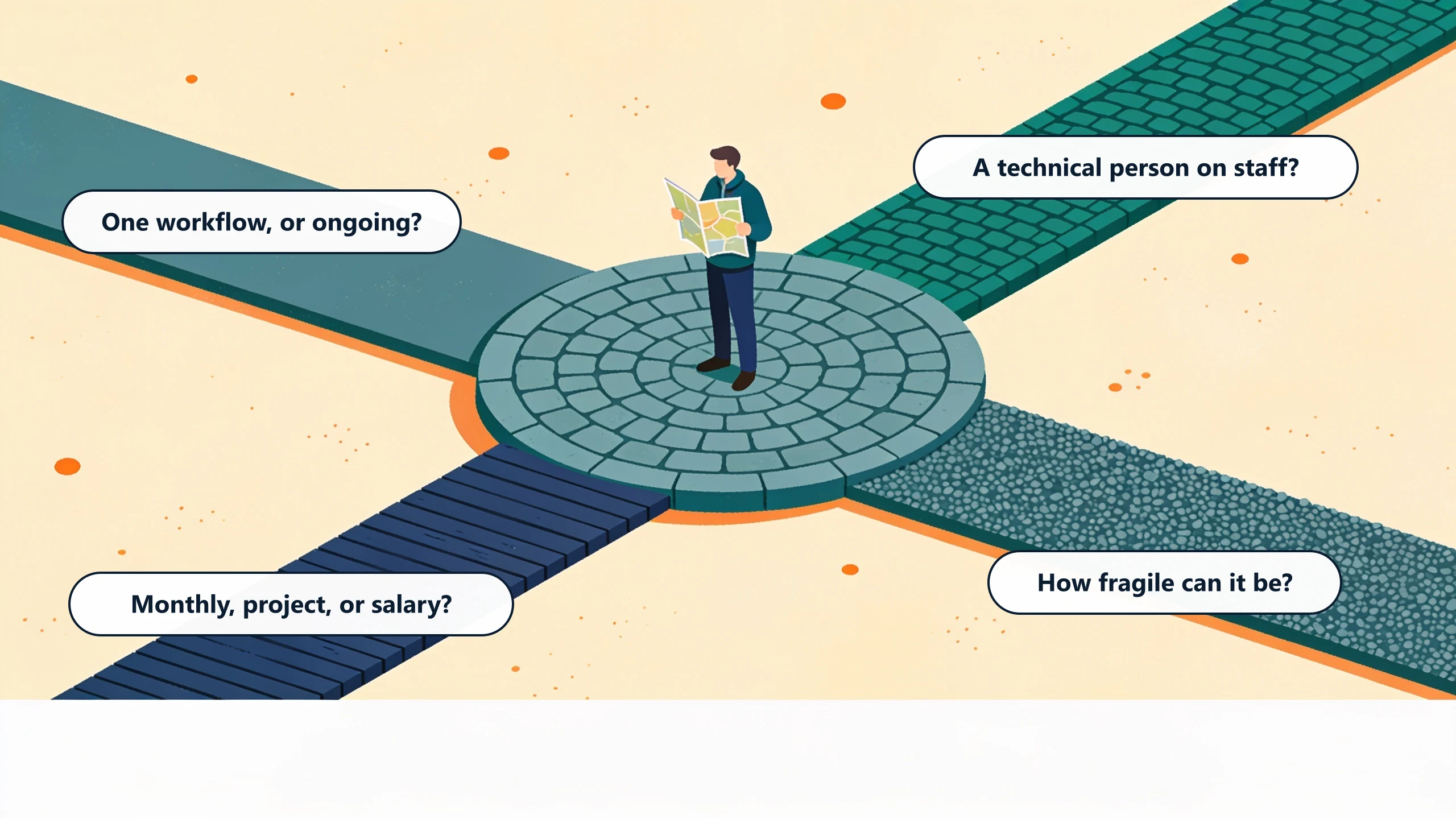
Owners brace to lose control when they hand a workflow to an outside vendor, because the dev-shop script trains them to expect a build, a handoff, and silence. What actually happens with a managed model is the reverse: the people who do the work keep the day-to-day, and we own the parts that break. Handing off the maintenance is not handing off the control, and we are still accountable for the software long after a project shop would have invoiced and moved on.
Mistakes to avoid
- Hiring a freelancer for a mission-critical workflow without a technical owner on staff. The disappearance risk plus the maintenance question makes this a recipe for losing the workflow when something breaks.
- Hiring a dev shop and skipping the maintenance contract. They will quote you a build. They will deliver. They will walk away. Six months later, an integration changes and the tool stops working. You will pay $150 per hour to call the original developer back. The maintenance cliff is real.
- Hiring a single internal developer at a 30-person company. They will not have a peer for code review. They will burn out or leave. Hire two or do not hire.
- Building DIY first and assuming you can refactor later. You can, but the refactor often costs more than building right the first time. Match the model to the workflow on the front end.
What to do this week
Pick the specific software you are considering building. Run it through the four-question decision tree above. Walk us through the answer on a free 30-minute discovery call. If model 1 is the right fit, we will tell you. If a different model fits, we will tell you that too.
No pitch, no pressure. We diagnose, you decide.
Have a question? We reply by email, no call needed.