
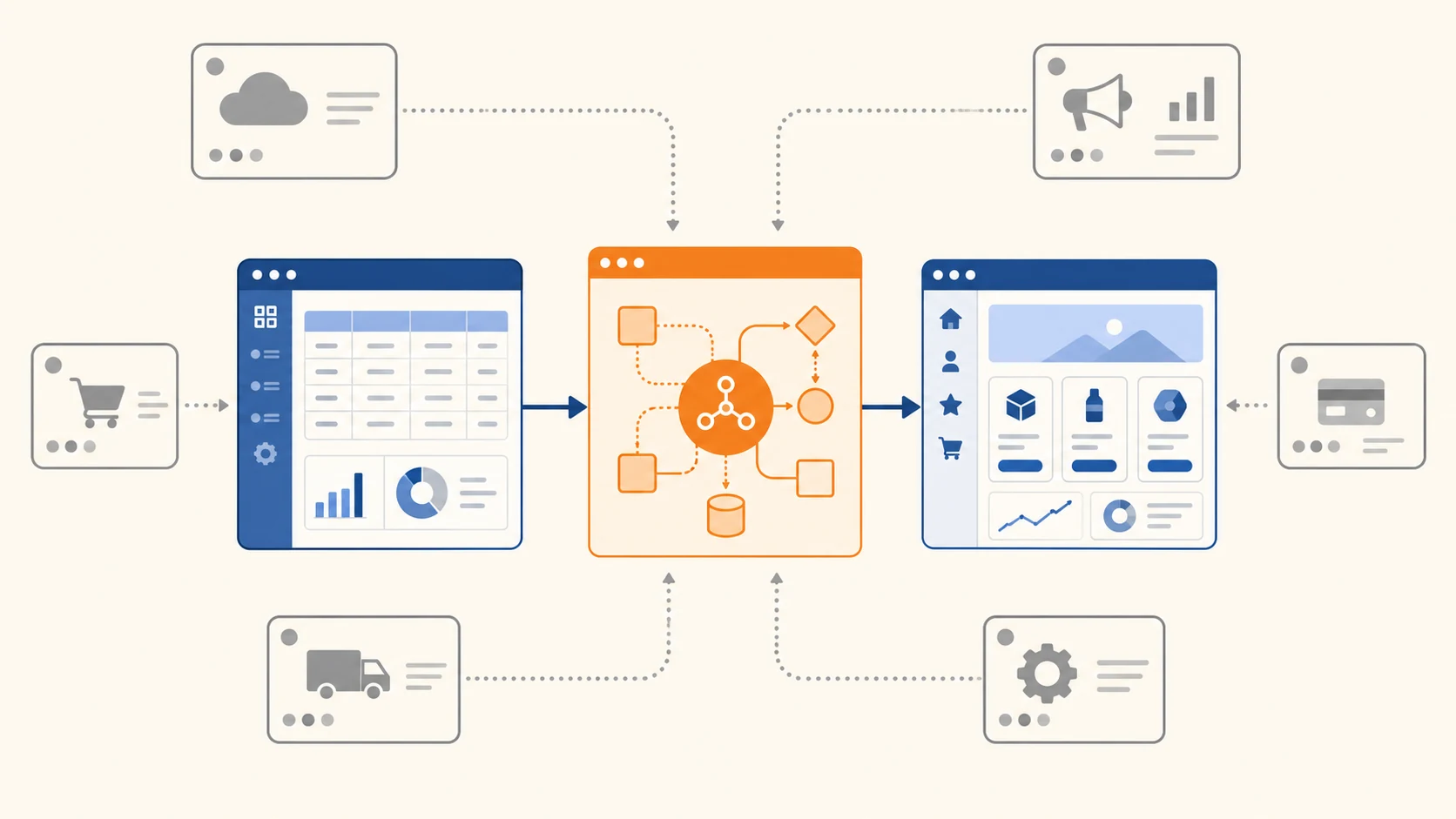
A typical small and medium wholesale distributor runs an ERP they barely use, a separate tool for B2B portals, an EDI translator that cost $15,000 a year and works 90 percent of the time, a shipping integration, an inventory tool, and Excel for everything those tools cannot quite handle. The total monthly software bill is between $4,000 and $9,000. Most of it is paid to compensate for the fact that none of the tools talk to each other cleanly. Here is the consolidation playbook.
Why distributor stacks bloat
The bloat is not because anyone made bad decisions. It is because the distribution business is integration-heavy by nature, and every integration is a vendor relationship.
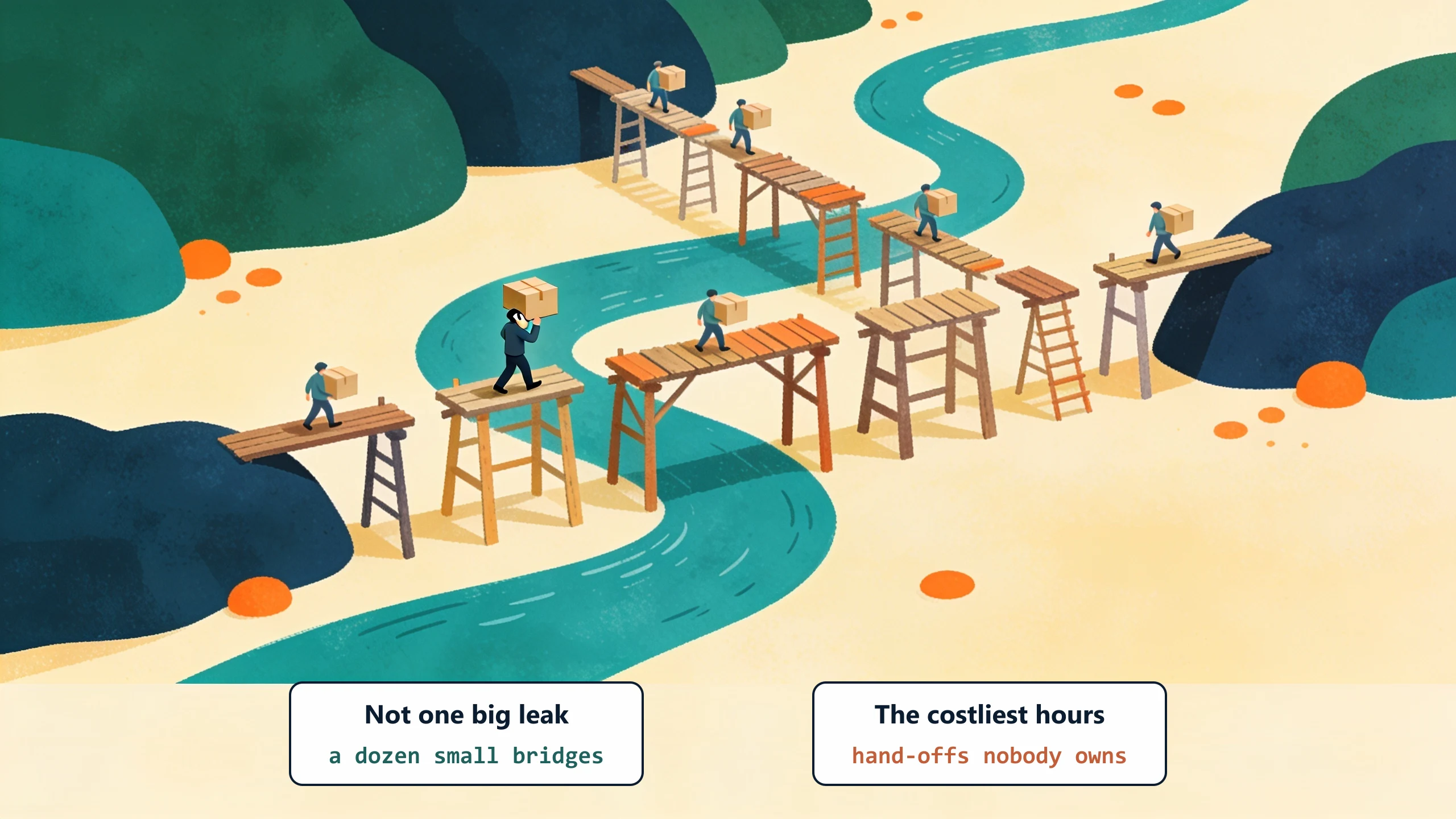
We rarely find one big leak; we find a dozen small bridges, each propping up the last. The costliest hours hide in the manual hand-offs nobody owns: re-keying an order between two tools, reconciling a rebate by hand, confirming a count by phone that a screen already claims to know. The single broken system is the easy one to name; the scattered patchwork around it is what actually drains the week.
EDI is rarely a single problem
Each retail customer wants different EDI formats, different document sets (850, 855, 856, 810), different test cycles, and different penalties for failures. Your EDI tool covers the common cases. Your custom code or VAN provider covers the edge cases. The combination is brittle.
Inventory truth lives in three places
The ERP says one number. The shipping integration says another. The B2B portal might be a third. When they disagree, somebody calls the warehouse to count.
Pricing logic is per-customer
Volume tiers, contract pricing, MAP rules, regional surcharges. Most ERPs handle this badly. Distributors patch with spreadsheet rules and a sales rep who memorizes the exceptions.
What the consolidated stack actually needs
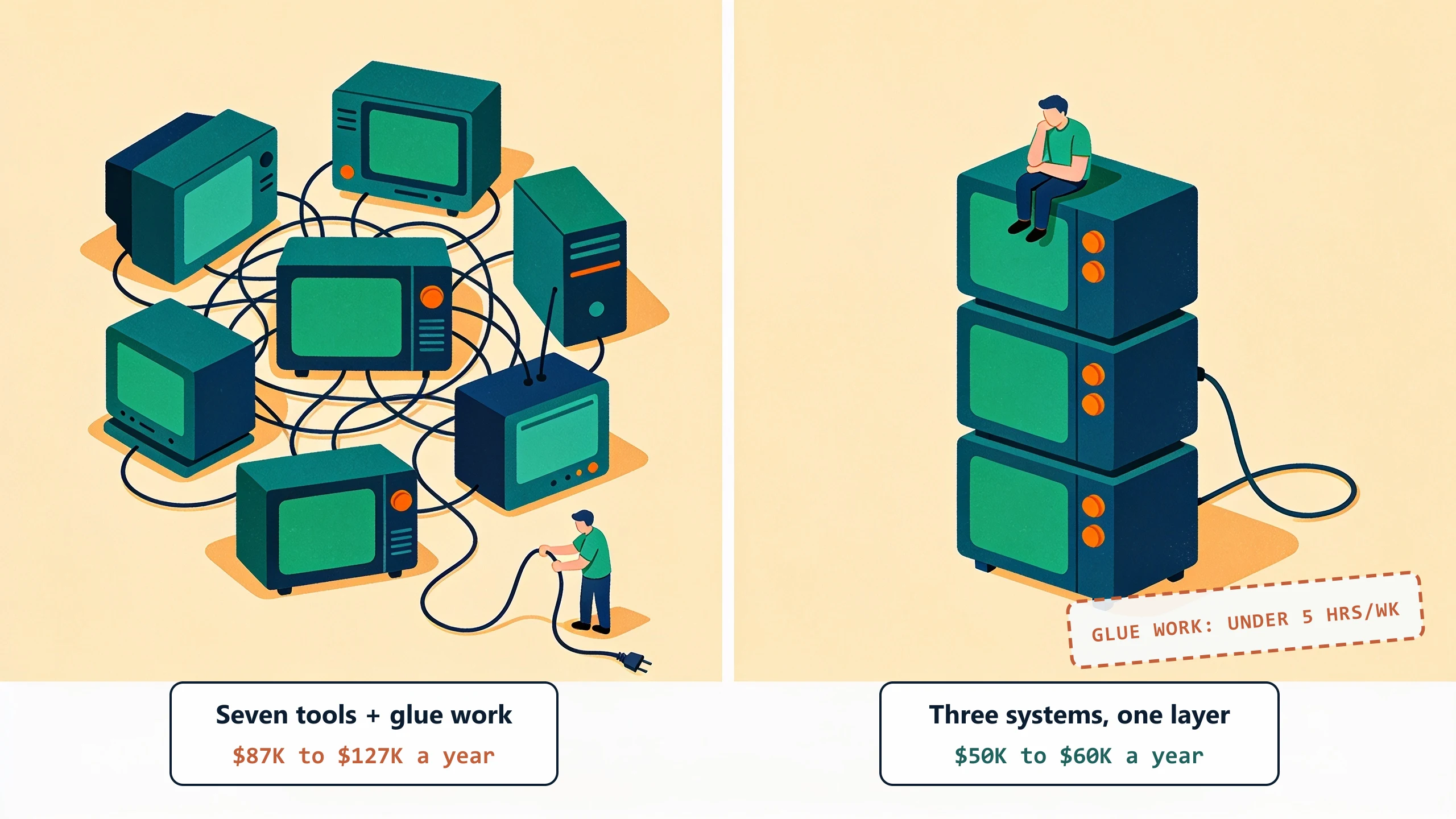
Most distributors at this size can run on three systems instead of seven. The right three:
The ERP / accounting system
QuickBooks, Sage, NetSuite, or your existing system. This is the source of truth for customers, items, prices, and money. Replacing it is a 9 to 18 month project. Do not start there.
The integration and orchestration layer
This is the layer that does not exist out-of-the-box for most distributors and is the single best place to consolidate. EDI in and out, shipping carrier integration, B2B portal data, inventory sync. One layer. Built around your specific customer mix and your specific ERP. Custom-plus-managed makes sense here because the rules are too specific for off-the-shelf tools to nail.
The customer-facing layer
B2B portal, sales-rep app, customer-specific catalogs. Whether you build this or buy it depends on your customer mix.
The math on consolidation
For a typical 30-person distributor:
- Current stack: ERP ($800/month), EDI tool ($1,200/month), B2B portal ($600/month), shipping ($400/month), inventory tool ($500/month), reporting tool ($400/month). Total: $3,900/month, $46,800/year.
- Plus integration glue work: 15 to 25 hours per week of operations time across the team. Roughly $40,000 to $80,000 per year fully loaded.
- Total annual cost of the current stack: $87,000 to $127,000.
A custom-plus-managed integration layer (not replacing the ERP, just the integrations on top) typically runs a flat monthly fee plus the ERP cost. The 15 to 25 hours per week of glue work drops to under 5. The savings are real but the bigger value is in not losing customers to EDI failures and not stocking out because three tools disagreed.
What to do this week
List the seven things your software stack is supposed to do. Mark which are working, which are partially working, and which are duct-taped. The duct-taped ones are the consolidation candidates. Bring the list to a free 30-minute discovery call and we will scope what a single integration layer would replace.
No pitch, no pressure. We diagnose, you decide.
Have a question? We reply by email, no call needed.