
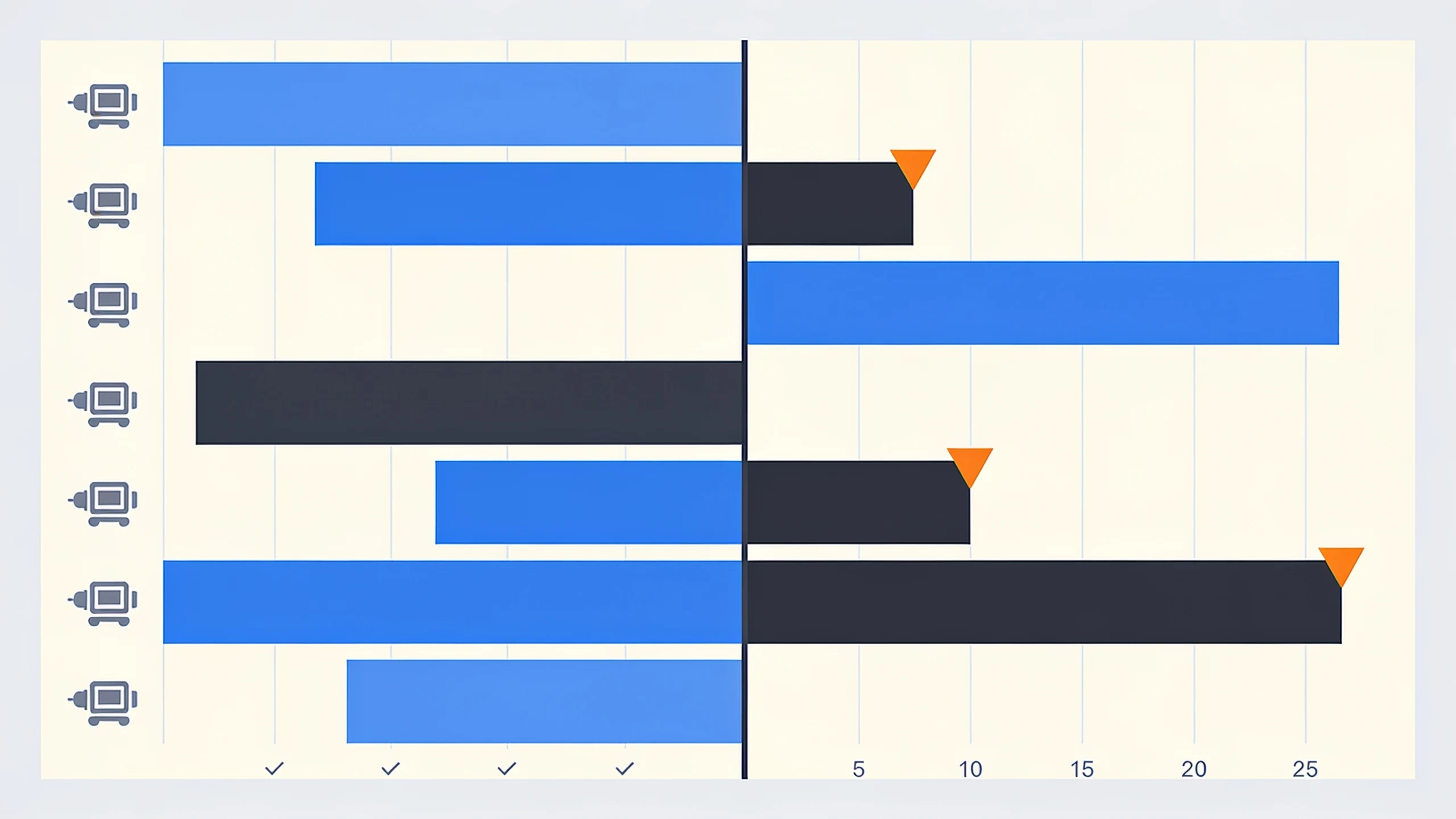
Most small manufacturers schedule production in a spreadsheet. It works until it does not. As the shop adds machines, customers, and rush jobs, the schedule that one person maintained in their head and a workbook becomes the bottleneck nobody can see around. The question owners reach is whether to buy scheduling software for manufacturing or build a tool that fits the shop they actually run.
When the spreadsheet schedule breaks
A production schedule in a spreadsheet has a single owner, no live view for the floor, and no memory of why a job moved. When that person is out, the shop slows. When a rush order comes in, reshuffling the board means manually checking machine load, material availability, and promised dates across tabs. The schedule is always slightly out of date, and the cost of that is missed promise dates and idle machines waiting on the next setup.

What off-the-shelf scheduling software gives you, and what it costs
Off-the-shelf scheduling and ERP-scheduling modules exist, and for some shops they fit. The trade is that you have to model your routings, your operations, and your constraints in the vendor's data shape, often before the tool produces anything useful. Shops with ten years of real-world scheduling logic in a workbook frequently find the configuration burden larger than the scheduling headache, and the per-seat pricing assumes a planning team the shop does not have.
When a custom tool fits a small shop better
When we map a shop's scheduling, most of the real plan turns out to live nowhere on paper: which jobs can share a setup, which customer will not tolerate a slip, which machine the night shift avoids. That informal sequencing is the part we have to encode by hand, because no off-the-shelf board ever captures it.
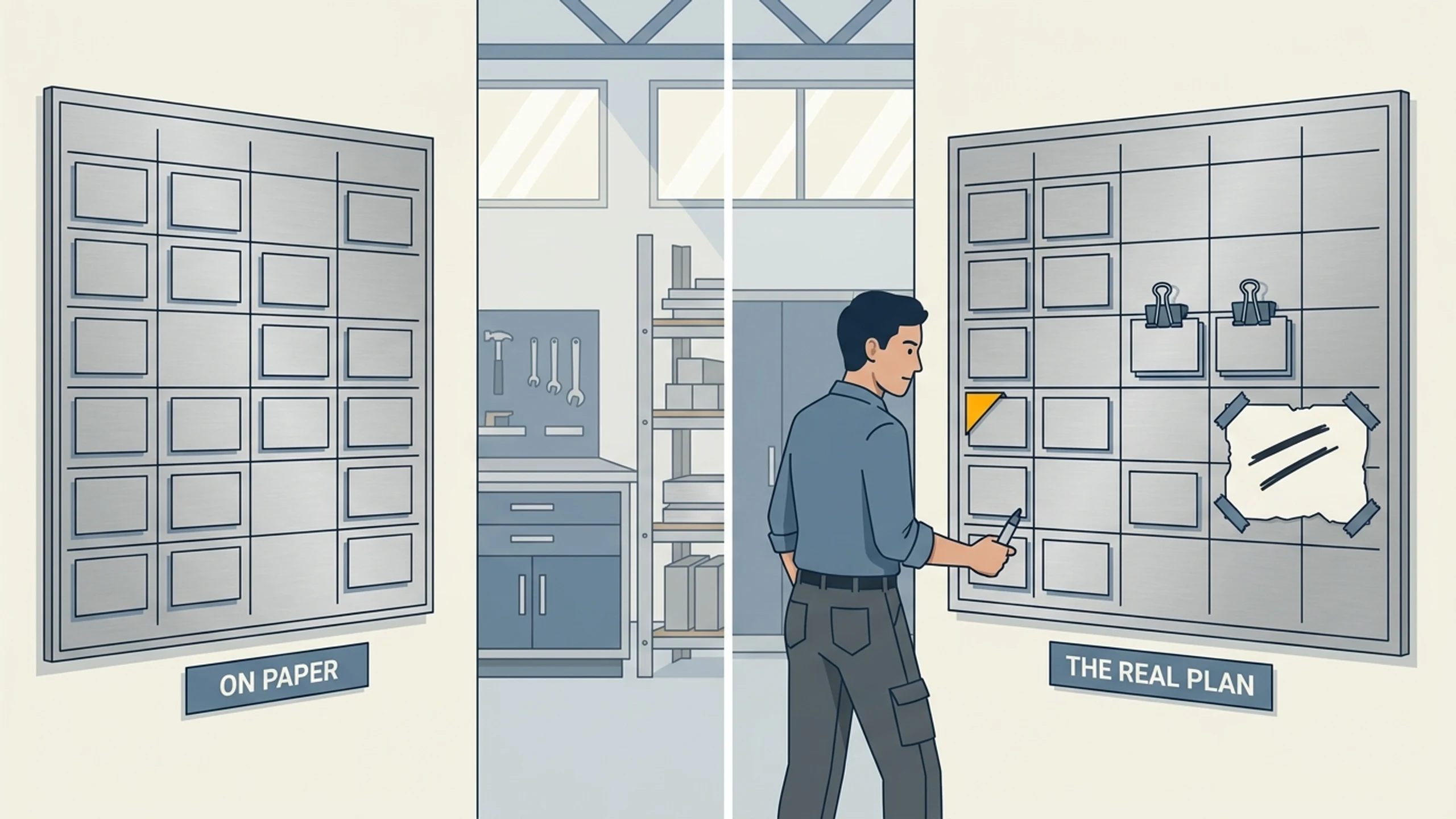
If your scheduling logic lives in one scheduler's head and a spreadsheet, a custom tool can encode that logic instead of replacing it. It shows the floor a live view, it flags conflicts between machine load and promised dates, and it lets more than one person work the schedule safely. You keep the way you already plan; you lose the fragility. ByteQuix builds that tool around your shop and runs it for a flat monthly fee, so there is no platform for your team to learn and no developer to hire.
How to decide
The test: if a packaged platform matches how you schedule out of the box, buy it. If you would spend three months bending your shop to fit the software, a custom tool built from your existing logic is usually the better fit. The ByteQuix pilot (one to three weeks to build, 30 days live) takes your scheduling spreadsheet and builds a working tool against an outcome you set first, then graduates onto the Starter tier to keep it running.
If your production schedule still lives in a workbook only one person can drive, book a free 30-minute discovery call and walk us through how you schedule today. We will tell you whether buying or building fits your shop before you commit to anything.
No pitch, no pressure. We diagnose, you decide.
Have a question? We reply by email, no call needed.