

For a small business with 25 to 75 employees, the HR-software market has two answers. Payroll-plus-directory tools (Gusto, Rippling Lite, Paychex) handle pay and basic records. Mid-market HRIS platforms (BambooHR, Namely, Paycor) handle structured workflows but cost real money and assume a dedicated HR team. The space in between is where most growing small businesses get stuck. Here is what an operational HR system actually needs to do at this scale and where custom makes sense.
The four operational jobs HR software is really doing
Below the marketing, four jobs cover most of what a 25 to 75 person company needs from an HR tool.
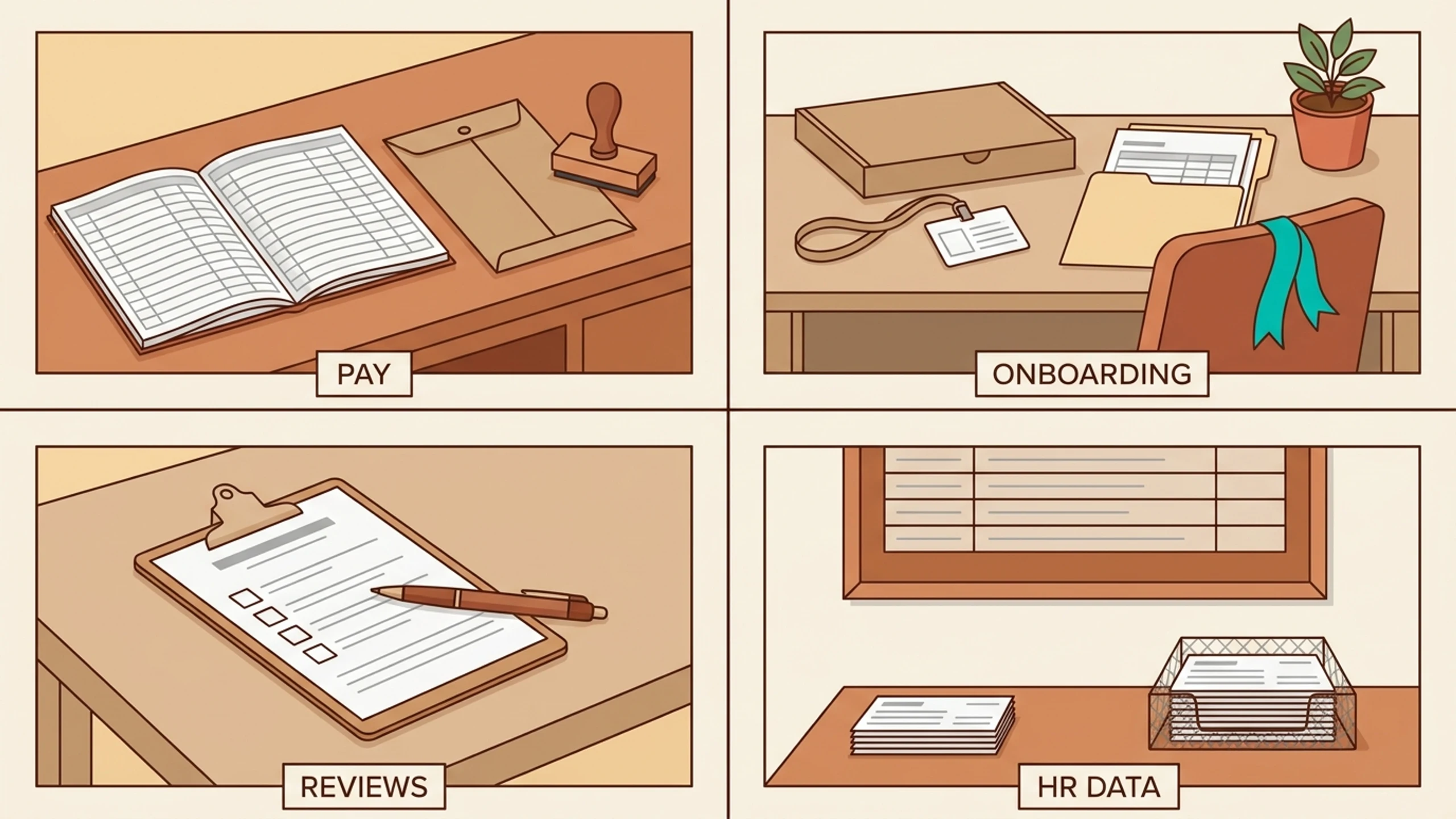
Pay and benefits administration
Payroll runs on schedule, benefits enrollment works, taxes get paid, W-2s come out. This is solved by Gusto, Rippling, ADP, or Paychex at $40 to $80 per employee per month. Custom does not belong here. Buy.
Onboarding workflows
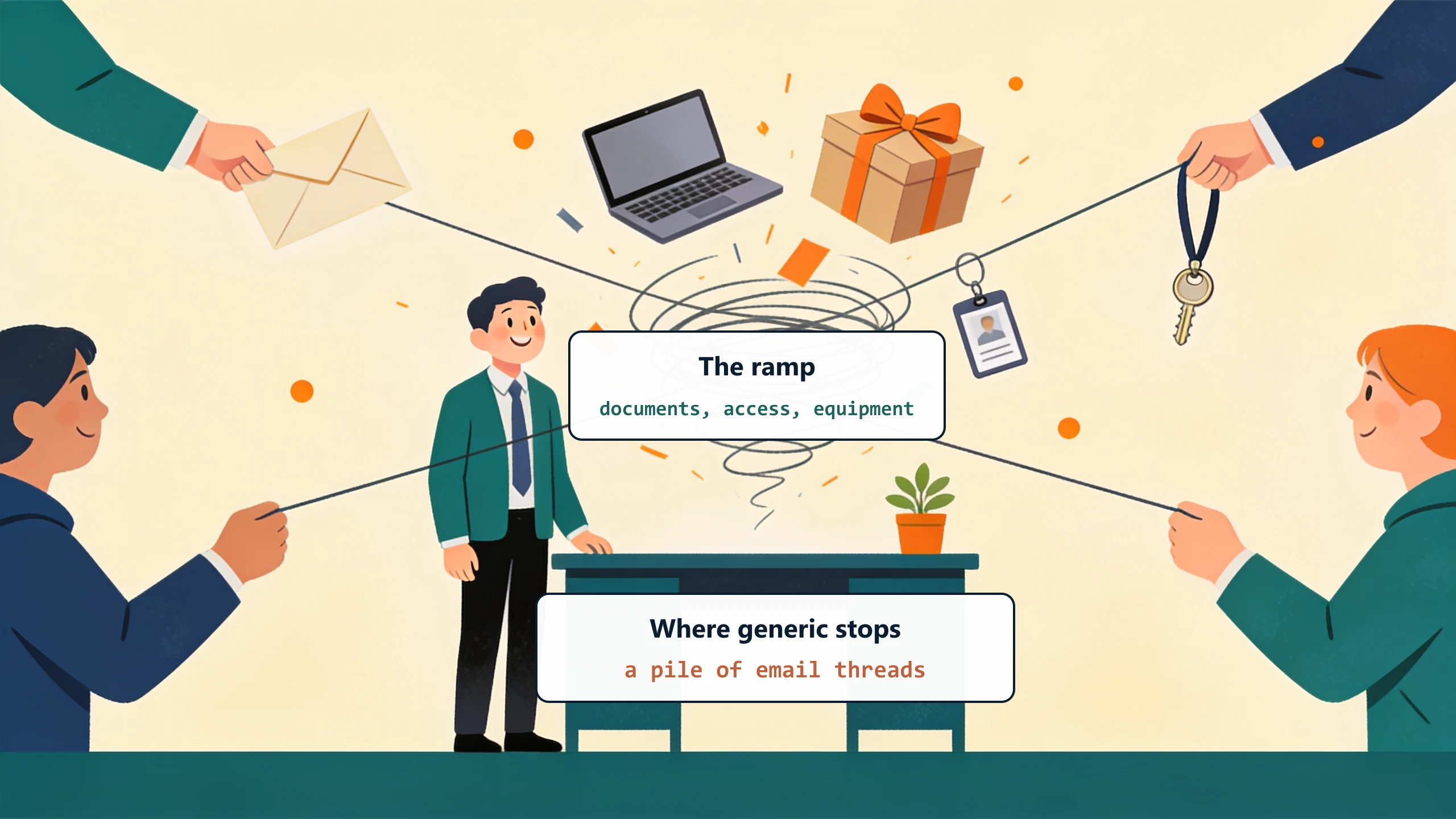
New hire signs offer, completes I-9 and W-4, picks benefits, gets a laptop, gets system access, meets the team. Generic tools handle the documents. They do not handle the company-specific 14-step process that gets a new tech ramped up in week one. Custom usually wins here.
Performance and review tracking
Quarterly check-ins, annual reviews, goal tracking, compensation decisions tied to outcomes. Generic tools provide forms. They do not capture the company-specific philosophy. Smaller companies do this in spreadsheets. Mid-size HRIS platforms handle it but expect you to use their model.
Operational HR data
PTO accruals, time-off requests, manager approvals, headcount planning by department, turnover dashboards. The kind of data the owner looks at monthly to make decisions. Most SMBs build this in spreadsheets that go stale within a quarter.
Where SMBs get stuck
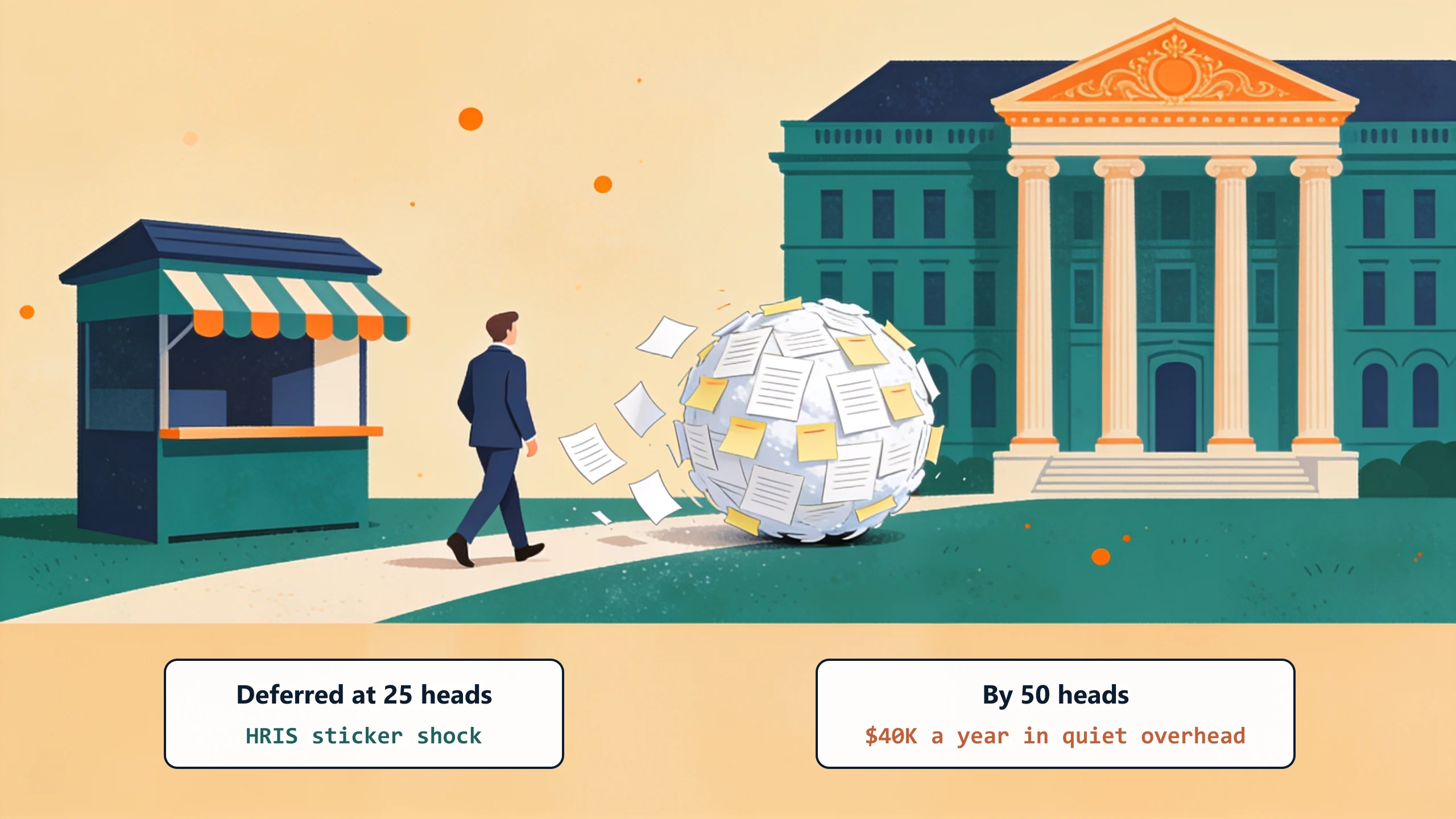
The story is consistent across industries. The company starts with Gusto or similar at 10 employees. Around 25 employees, the spreadsheets that supplement the payroll tool get unwieldy. The owner shops mid-market HRIS platforms (BambooHR, Namely) and gets sticker shock at $8 to $15 per employee per month plus implementation. The decision gets deferred. By 50 employees, the company is paying $40,000 a year in operational HR overhead (a part-time HR coordinator, the spreadsheets they maintain, and the time managers spend on duplicate paperwork) without ever signing the platform contract.
What a custom-plus-managed alternative looks like
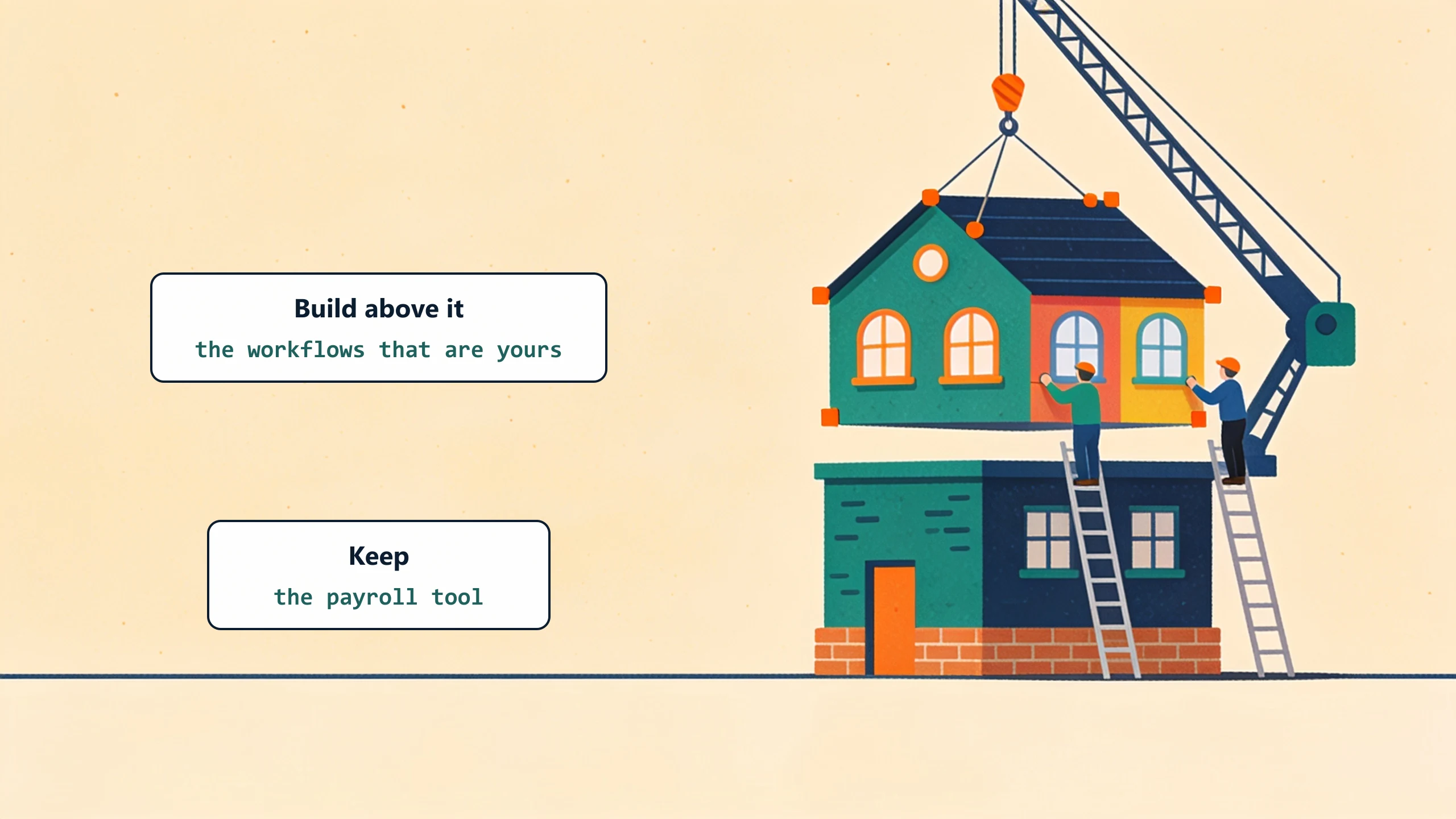
Keep the payroll tool. Build the layer above it that handles the company-specific workflows.
Onboarding workflow tool
The new-hire checklist, document collection, system access provisioning, equipment ordering, benefits enrollment links. Tied to your specific 14-step process and your specific systems. Manager and HR coordinator both see status.
PTO and time-off tracker
Accruals by your specific policy, request workflow with manager approval, calendar view by department, end-of-year carryover rules. Tied to payroll for the deduction.
Review and check-in workflow
Quarterly check-ins with prompts that match your company philosophy, annual review templates, goal tracking, compensation history. Stored as a real record, not a Google Doc.
Operational dashboards
Headcount by department, turnover rate, time-to-fill, comp ratio, manager span of control. The numbers the owner looks at monthly.
Cost: a one-time pilot fee, then a flat monthly fee. Sits alongside Gusto / Rippling / ADP, not replacing them. Roughly half the cost of a mid-market HRIS platform at this employee count, with the upside that the workflows match how the company actually runs.
Onboarding, not payroll, is the job that most often justifies a build at this size. Across the onboarding tools we have built, the company-specific ramp (the document chase, the system access, the equipment, the manager check-ins) is exactly the part generic HR platforms leave as a pile of email threads, and that is where a custom layer earns its keep first.
What to do this week
Walk through your last new hire's onboarding. Count the documents that got emailed back and forth, the systems someone manually provisioned, the IT tickets that opened, the manager check-ins that happened or did not. Multiply by your annual hiring rate. The total is your annual onboarding-overhead cost. Bring it to a free 30-minute discovery call.
No pitch, no pressure. We diagnose, you decide.
Have a question? We reply by email, no call needed.