
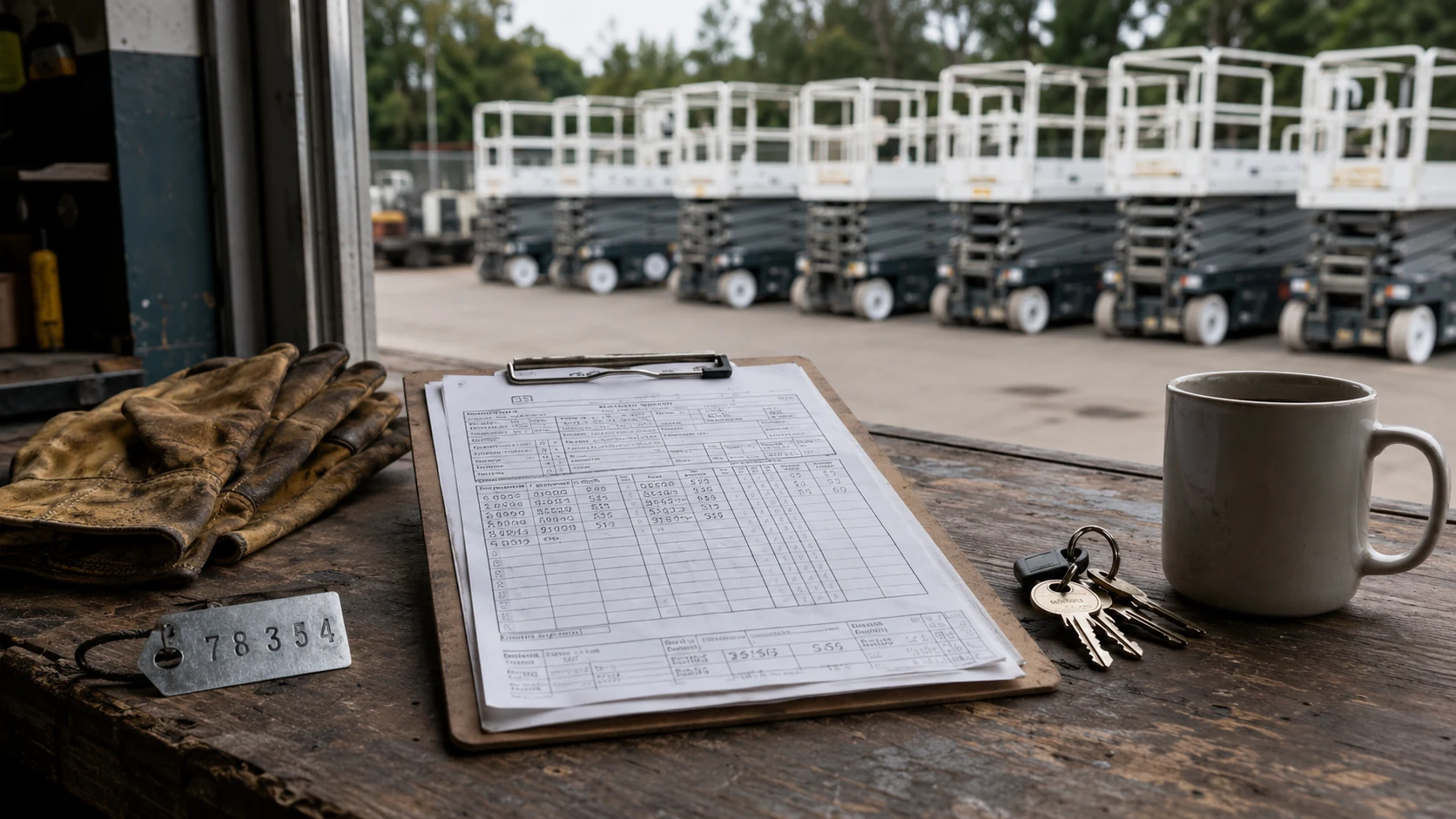
An equipment rental shop with 200 units and three people running it can survive on Excel and a paper rental log. At 400 units and seven people, the spreadsheet starts losing transactions, the asset-history record goes stale, and double-bookings cost real money. RentalMan and Point of Rental will quote you $30,000 to $90,000 a year. A shop this size typically needs a fraction of what those platforms do. Here is how to figure out which fraction, and what the alternatives look like.
The four operational jobs that matter
Rental software is not one job, it is four. Each fails differently when Excel breaks.
Real-time availability
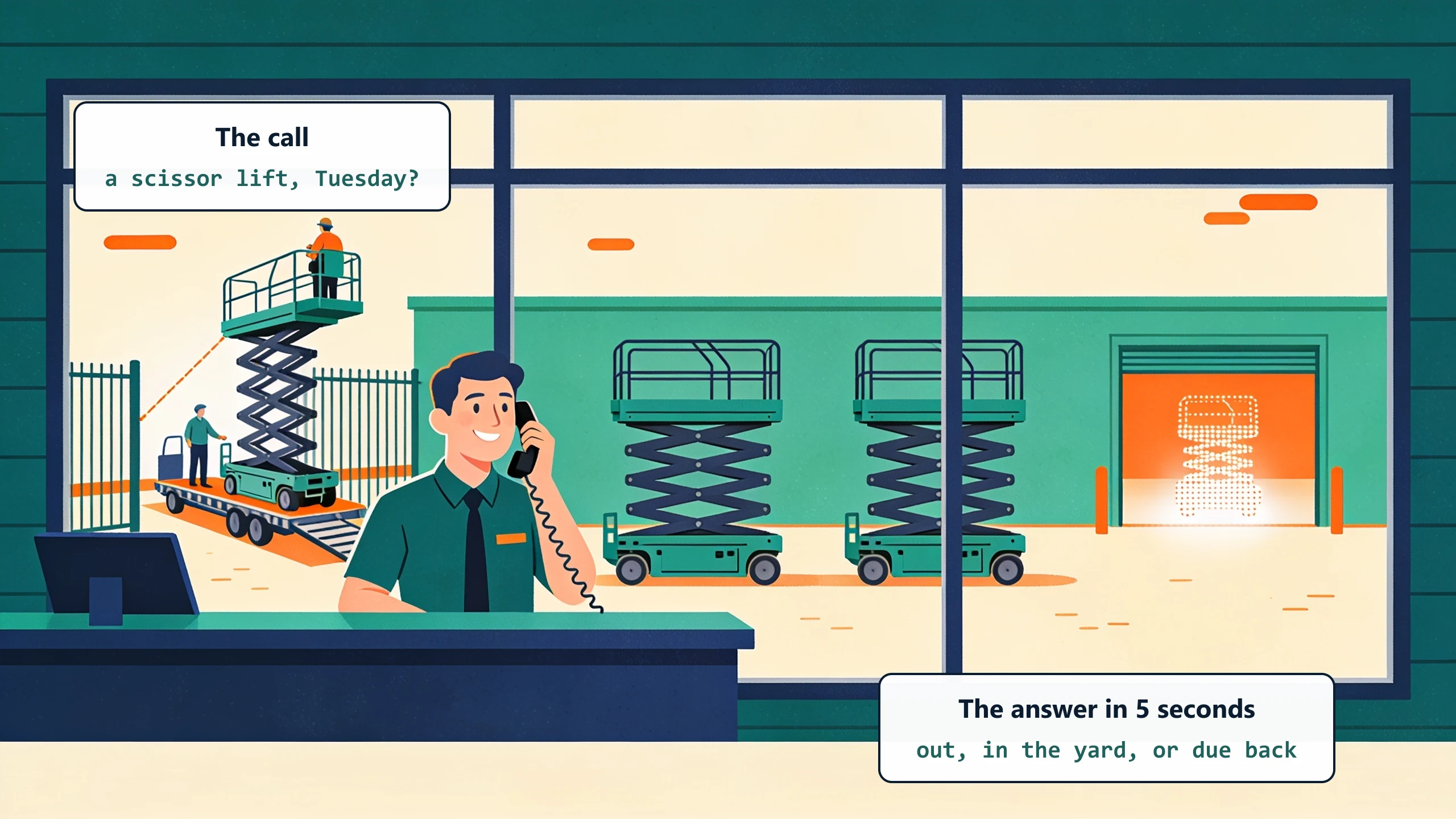
Customer calls asking about a 30-foot scissor lift on Tuesday. The person on the phone needs to know in 5 seconds: do we have one out, do we have one in the yard, when is the next one back. Excel cannot do this without somebody updating it after every transaction. A real system tracks rental status as a database fact, not a spreadsheet entry.
Utilization tracking
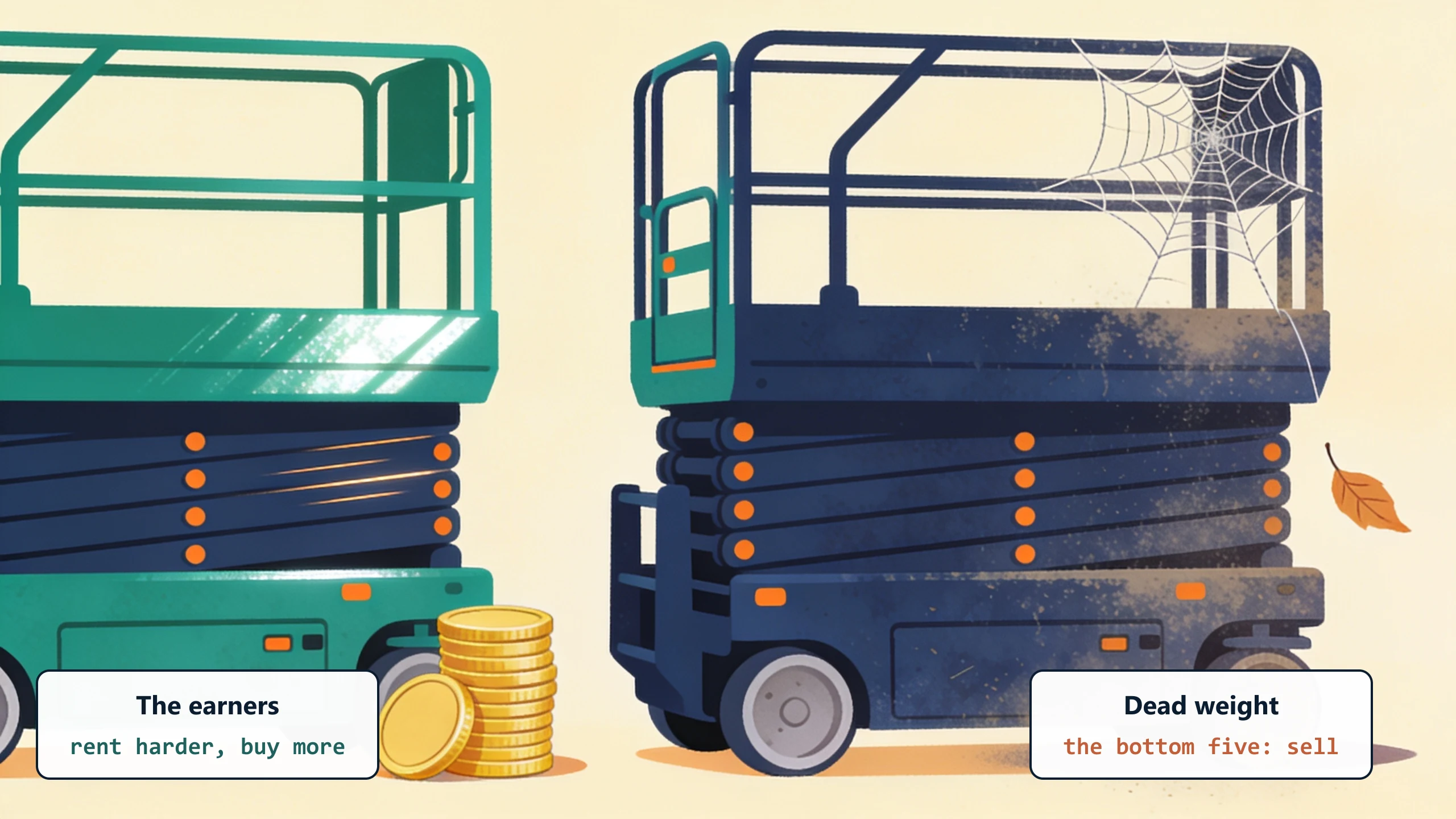
Which units earned their cost back this quarter, which are dead weight. The rental shops that get this right buy fewer units and rent them harder. The ones that do not run blind on capital allocation.
Asset history
Each unit has a service log: when it was bought, what it has been rented for, what it has cost in repairs, what it sold for at end of life. Without this, you cannot price replacement decisions, you cannot answer warranty questions, and you cannot defend insurance claims.
Billing and damage waivers
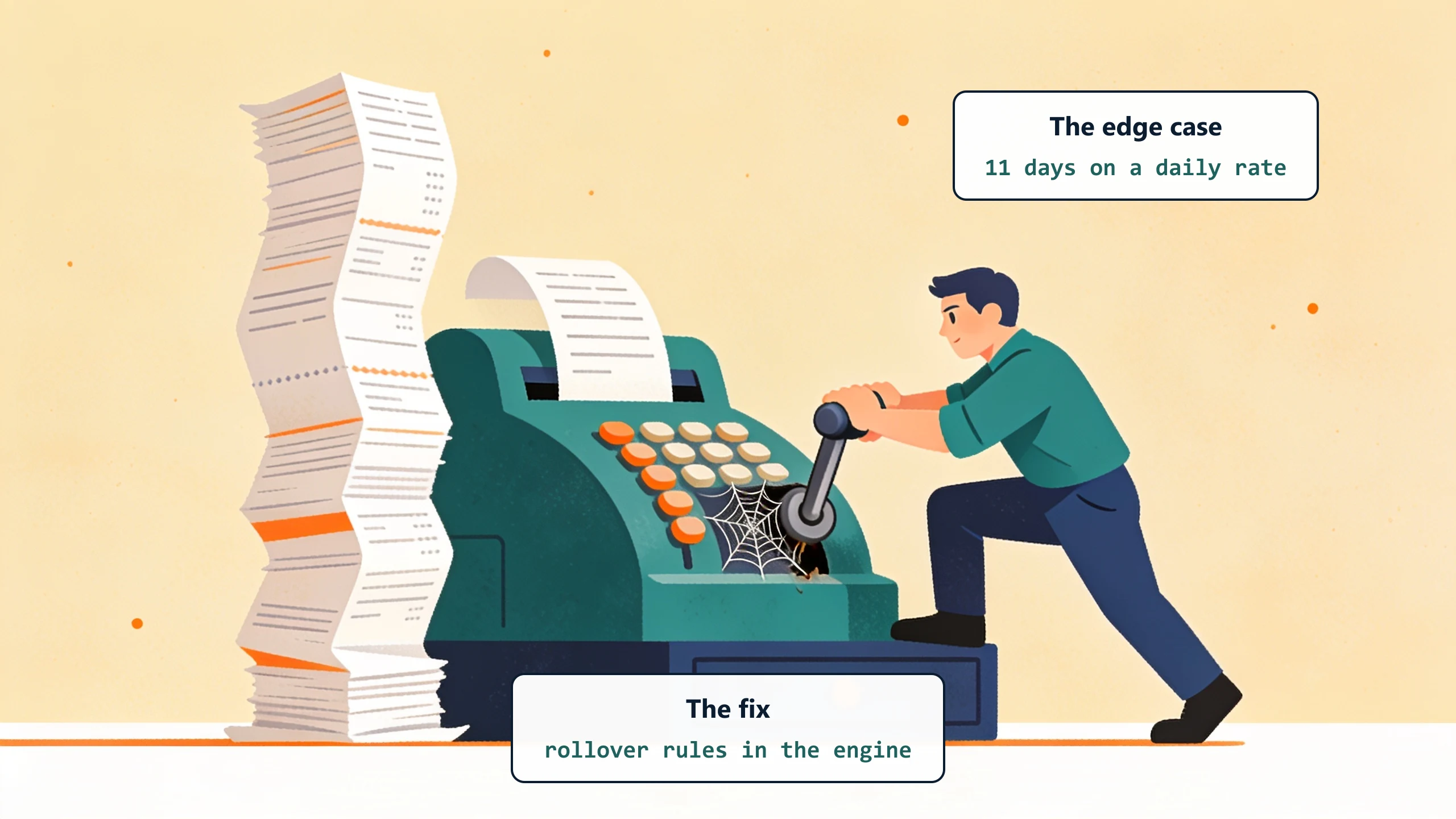
Daily, weekly, monthly rates. Damage deposit handling. Late returns. Damage charges. The billing logic is more complex than most SaaS thinks. Rental shops that get burned here usually have one customer who ran a unit for 11 days on a daily rate that should have rolled to a weekly rate three days in.
What the platforms do, and what they cost
RentalMan, Point of Rental, Wynne Systems, Texada. Strong platforms for shops with 800-plus units and multiple branches. Cost: $30,000 to $90,000 per year for a small shop, plus implementation. The platforms ship with broad assumptions about how rental works. Some shops fit. Many do not (specialty equipment, seasonal pricing, regional accounts with custom terms). Implementation runs 90 to 180 days.
The other cost worth flagging: data ownership. Some platforms make exporting your rental history non-trivial if you ever want to leave. That is a 5 to 10 year decision; the integration cost of changing platforms later is real.
The custom-plus-managed alternative
For a 200 to 800 unit shop with QuickBooks already in place, the math often works for a custom layer instead of a platform replacement. A typical scope:
- Rental status board with real-time availability, tied to a phone-first check-in / check-out flow.
- Asset cards with full lifetime history (purchase, rentals, repairs, current value).
- Utilization dashboard the owner looks at weekly to make capital decisions.
- Billing engine with daily/weekly/monthly rate logic, damage deposit, and late-return rules. Invoices flow to QuickBooks automatically.
What rental owners underestimate is the billing engine. Mapping deposit handling, late-return rules, and the daily-to-weekly rollover eats more discovery time than the availability board everyone walks in worried about. The rate logic is where the edge cases hide, so that is the piece we pin down with the owner first.
A one-time pilot fee, then a flat monthly fee. Roughly 60 percent less than the platform alternative for shops at this size, with the upside that the workflow matches how your shop actually runs.
What to do this week
Spot check 10 random units in your spreadsheet against the yard. How many disagreements? Two or more is a signal. Then pull your last 30 days of rentals and compute utilization (rental-days divided by available-days) for your top 20 highest-cost units. The bottom five are candidates to sell. The top five are candidates to buy more of. If the spreadsheet does not let you compute that in 10 minutes, the spreadsheet is the bottleneck. Bring the numbers to a free 30-minute discovery call.
No pitch, no pressure. We diagnose, you decide.
Have a question? We reply by email, no call needed.